Venus enters Scorpio on September 10, 2026, and stations retrograde on October 3. During the retrograde, it disappears from the evening sky, forms its inferior conjunction with the Sun at 0°45’ Scorpio, returns to Libra, and enters Scorpio again on December 4.
| For an interpetation of this transit, you can read Venus Enters in Scorpio on my Substack.
Below are the dates, degrees, stations, aspects, and phases of Venus’s synodic cycle during this period, together with the sequence of this same point of the Venus pentagram.
Venus Retrograde 2026: Sign Ingresses and Stations
Sep 10, 2026: Venus enters Scorpio
Oct 3, 2026, 07:16 UT: Venus stations retrograde at 8°29’ Scorpio
Oct 25, 2026: Venus retrograde enters Libra
Nov 14, 2026, 00:27 UT: Venus stations direct at 22°51’ Libra
Dec 4, 2026: Venus enters Scorpio again
Jan 7, 2027: Venus enters Sagittarius
Venus Synodic Cycle 2026
Until the inferior conjunction: evening star
~Oct 19, 2026: evening heliacal setting; Venus disappears from view after sunset
Oct 24, 2026, 03:43 UT: inferior Sun–Venus conjunction at 0°45’ Scorpio
Venus is retrograde and positioned between Earth and the Sun
After the inferior conjunction: morning star
Approximate length of the Sun–Venus synodic cycle: 583.9 days
The inferior conjunction marks the end of one cycle and the beginning of the next
Five Venus synodic cycles equal approximately eight years and form the five points of the Venus pentagram
The Same Point of the Venus Pentagram: 2010, 2018, 2026 and 2034
2010: inferior conjunction in Scorpio
Oct 26, 2018: inferior conjunction in Scorpio
Oct 24, 2026: inferior conjunction at 0°45’ Scorpio
Oct 21, 2034, 17:03 UT: inferior conjunction at 28°22’ Libra
Essential Dignity of Venus in Scorpio
Domicile: Taurus and Libra
Exaltation: Pisces
Scorpio: detriment, as it is opposite Taurus
Venus Aspects: September–December 2026
Sep 10: Venus 0°15’ Scorpio opposition Chiron 0°15’ Taurus
Why can a planet change houses depending on the house system we use?
If you have ever changed the house system in an astrology program, you have probably noticed that the chart changes too. A planet may appear in the 2nd house with Placidus, in the 3rd house with Koch, and again in the 2nd house with Campanus.
So which version is correct? How is it possible to have two different versions of the natal chart describing who I am or how I function?
The short answer is: they are all correct. House systems are calculated using different mathematical methods; that is why the division of the houses changes. And we can look at the philosophical correspondence of those calculations to determine what we are reading according to the house system we use.
The chart you see on the screen is two-dimensional, but it represents a three-dimensional, spherical geometry. It is the sky seen from a specific point on Earth, at a specific moment. The different house systems are different ways of translating that geometry into the circle of the chart, and that is why the cusps can change position.
The key is not to think that each system is dividing the same circle in an arbitrarily different way. In reality, each one first decides which dimension of celestial space it wants to divide into twelve sectors. It then projects that division onto the ecliptic, which is what we ultimately see drawn in the chart. Placidus, Koch, and Campanus are quadrant systems and preserve the Ascendant and Midheaven as the cusps of houses I and X; Equal Houses follows a different logic.
That is why we can translate the mathematics into an interpretive question.
I would separate them like this:
System
What it takes as reference
Interpretive analogy
Question
Placidus
Diurnal/nocturnal movement; temporal division of arcs
process / becoming
Through what experience does this develop?
Koch
Also movement and time, but calculated differently from local latitude and the MC
rhythm of actualization / situated temporality
When, or through what rhythm, does this become effective in my experience?
Campanus
Three-dimensional division of local space around the observer
existential position / orientation in space
From what place in my existence do I enter into relationship with this?
Equal Houses
30° of the ecliptic from the Ascendant
zodiacal order of experience
In what structural territory of my life does this express itself?
And I think each one can be refined much further.
Placidus: the chart as process
Astrodienst describes Placidus as a division of the phases of movement of celestial points above and below the horizon. In other words, beneath the geometry of Placidus there is a temporal idea: something is rising, culminating, descending, or moving toward the bottom of the sky.
Interpretively, then, I would not see a Placidus house simply as “an area of life,” but as a phase of actualization. It is as if the planet were something that is happening, and the house described where it has to pass through in order to manifest.
Mercury in the 4th house in Placidus, for example, would not necessarily have to mean only “Mercury = family/home.” It could mean that Mercury becomes actualized through a process of interiorization, roots, memory, belonging, and the construction of a subjective foundation. The house would almost be a verb.
In that sense, Placidus asks less “where is this?” and more “through what process does this come into being?” And that explains why it can feel so psychological: it turns the chart into a kind of movement between birth, culmination, descent, and gestation.
Campanus: the Chart as Lived Space
Campanus does something very different. It divides the prime vertical, a great circle that passes through the zenith, nadir, and east-west points, into twelve equal sectors, and then projects those divisions onto the ecliptic. It is literally a division of the local sphere around the observer.
That is why a very powerful analogy appears here. Campanus could describe: Where is this located within my sphere of existence? Not so much the process through which something happens, but the orientation of the individual in relation to the world.
It is like standing inside a sphere instead of looking at a sheet of paper. There is sky above, earth below, a horizon around you, an east, a west, and a meridian. Campanus divides precisely that space. A Campanus house could therefore be understood as a kind of existential direction.
For example, Mercury in Sagittarius in the 5th house in Campanus does not have to mean simply “creative communication.” It could be something much more elemental: thought and language occupy, within the individual’s sphere, the place from which something of one’s own moves out into existence. Creating, formulating, playing, naming, producing something that did not exist before.
Here, the 5th house would not be so much “an experience that produces Mercury,” but the direction toward which Mercury opens. That is why the formula we have been exploring works very well: Campanus: “How does this part of the individual open toward existence?” And perhaps even: “Where does it point?”
Koch: the Chart as Situated Time
Koch is interesting because conceptually it is related to Placidus. Both belong to the so-called temporal house systems. Swiss Ephemeris documentation explicitly notes that Koch is also based on diurnal and nocturnal arcs, although it constructs the cusps differently.
That is why I would not try to turn Koch into something radically different from Placidus. The difference could be more subtle. If Placidus says “How does this develop?”, Koch could say “How does this enter my time?” or “What is the rhythm through which this becomes present?”
There is something almost biographical there. Placidus seems more processual to me; Koch, more temporal-dynamic.
We can look at it through the analogy of a flower. Campanus would ask: Where does it grow toward? Placidus: What process does it go through from seed to flower? Koch: What is its season, its rhythm of growth, the moment when each phase becomes effective?
We cannot yet claim that this is “the correct interpretation” of Koch. This is already my own philosophical construction based on the geometry. But it seems coherent to me with what it is doing mathematically.
Equal Houses: the Chart as Architecture
Here something completely different happens. The exact degree of the Ascendant is taken, and from there twelve consecutive sectors of exactly 30° are constructed. The MC continues to exist as an astronomical point, but it does not necessarily coincide with the cusp of the 10th house.
This radically changes the question. We are no longer dividing time, nor are we dividing space three-dimensionally. We are imposing a regular structure on the ecliptic: 30°, 30°, 30°, 30°. It is almost a matrix.
That is why we could relate Equal Houses to something like the architecture of individual experience. If the Ascendant says “my experience begins from here,” then every 30° a new field appears:
1 → me. 2 → what I possess. 3 → what I relate. 4 → what I come from. etc.
But not because the local sky itself produced those divisions, but because we have constructed a regular sequence taking the Ascendant as the point of origin.
It could be formulated like this: Equal Houses: “How is experience organized from my point of entry into existence?” That gives it a much more structural quality than Placidus.
So perhaps we should not ask “Which house is Mercury really in?”, but rather “What dimension of being am I exploring when I ask which house Mercury is in?” Because each system could be answering something different.
Let us suppose we have Mercury in Sagittarius, but it appears in the 5th house in Campanus, the 4th house in Placidus, the 4th house in Koch, and the 5th house in Equal Houses. We have already seen that this does not necessarily create a contradiction.
What Mercury in Sagittarius is: a mind that seeks meaning, conceptual relationships, horizon, and interpretation.
Campanus — H5: where it opens toward → toward creation, formulation, and the externalization of something of one’s own.
Placidus — H4: through what process it develops → through interiorization, memory, roots, and the construction of a subjective perspective.
Koch — H4: where it finds its rhythm of actualization → in cycles of interiorization, belonging, and the establishment of a foundation.
Equal Houses — H5: what position it occupies within the individual’s overall architecture → the Mercurial function belongs structurally to the field of creation and individual expression.
So we can arrive at something quite sophisticated:
They would not be four competing interpretations. They would be four projections of the same multidimensional object.
I think this last image is probably the most precise: we are not changing the planet; we are changing the plane onto which we project its position. The same three-dimensional figure can produce completely different two-dimensional profiles depending on the angle from which it is projected.
Astrology for Lazy Brave People is a book designed to entertain the reader while confronting them with the less comfortable zones of their own sign. In a market saturated with pedagogical astrology and spiritual coaching, this work proposes a different perspective: one that dismantles astrological clichés to observe how we actually function, deliberately using exaggeration so that the reader can recognize themselves—and recognize others—amidst their daily routine.
A focus on the shadow and the archetype The book is structured as an archetypal astrology treatise, but with a format of ephemeral ideas. Instead of offering magical recipes for “evolution” or the integration of conflicting parts, the text focuses on the shadow of each archetype. The central premise is that the path toward supposed “evolution” is often exhausting and enslaving, stemming from the belief that we are imperfect as we are; therefore, the book invites us to stop trying to “fix” our factory design and, instead, understand how our contradictions, defense mechanisms, and dramatic tendencies operate.
What you will find in this manual:
Unfiltered analysis: Each sign is treated as an archetype with its own intelligence, rhythm, hunger, theater, and particular “private ridiculousness”.
The geometry of being: Through tools such as the Lunar Nodes, the book posits that we are a perpetual tension by design. We do not seek to be resolved, but to expand into the unknown in a constant state of becoming.
A practical structure: Each chapter breaks down signs, planets, ascendants, and compatibility, including sections such as “archetypal coffee” and “karmic tax returns,” offering a technical perspective in a format designed for entertainment.
Far from being a self-help manual, Astrology for Lazy Brave People is an invitation to brutal honesty with oneself. It is a book for those who prefer an acute and technical vision rather than spiritual instruction, reminding us that true freedom begins when we stop fighting against our original motor.
Astrology for Lazy Brave People – by Paula Lustemberg. Available in Kindle version on Amazon.
When I close my eyes and imagine the movement of the sky through the lens of astrological language, an image appears to me: an immense clockwork mechanism, where every transit or planetary configuration is the movement of a single gear shifting the field of forces in which we dwell. I perceive it as an ancient machinery, yet superior to any modern technology—I see it as something almost alien.
This vision is not a modern metaphor. It is, in reality, the core of Hermetic astrology and the deepest currents of traditional astrological magic. To understand how the planets affect us today, we must journey back to the very origins of this discipline.
The Celestial Machinery in the Corpus Hermeticum
In the ancient texts of the Corpus Hermeticum (dating from the 1st to the 3rd century CE), the sages of Alexandria did not view celestial bodies as mere psychological symbols. They described the planets as seven cosmic governors revolving in concentric spheres, forming a gigantic celestial machinery tasked with weaving human destiny.
For Hermeticism, the sky is a divine and intelligent architecture. Therefore, understanding planetary transits from this perspective completely transforms our relationship with time. A transit is not an isolated event or a stroke of luck; it is the turn of a wheel that aligns the macrocosm with our microcosm, reclaiming its exact correspondence upon the Earth.
The 3 Laws of Operative Mechanics in Traditional Astrology
By shifting our focus from “personal prediction” toward this operative, technical vision, we discover that celestial transits and configurations act under three fundamental dynamics:
1. The Transit as the Opening of a Window (Magic and Theurgy)
In theurgy and traditional magic, a celestial configuration did not dictate an absolute outcome; rather, it established an objective environmental condition. Like a navigator harnessing an ocean current, the Hermetic practitioner attuned themselves to the planetary movement so that their actions would encounter the least resistance and the greatest possible structural coherence with the cosmos.
2. Diagnosis of Archetypal Resistance
Faced with any difficulty or crisis, the birth chart was examined as a system of forces in tension. They did not seek emotional consolation, but rather a technical understanding of the friction. The problem ceased to be a personal drama and became a phenomenon of archetypal physics—an object of study that allowed one to observe the wear and tear or the pressure from the outside, like someone analyzing a mechanical part.
3. Tuning the Energetic Instrument
When a planet activates a specific point in your natal chart, it was understood that this particular part of your energetic structure or astral body was being excited by the celestial movement. The sovereign practitioner did not allow themselves to be swept away by the influx; instead, they leveraged that time of tension to purify and temper their capacity to channel that force.
From Fatalistic Prediction to Forging Destiny
For the Hermetic tradition, the celestial moment is a given condition, much like the temperature of the fire for a metalsmith: the artisan does not complain about the heat; they adjust their forging technique.
Those who contemplate the sky with technical rigor do not ask “what is going to happen to me?” but rather, “what is being activated within the structure of the world, and how can I align my will with this living current?”
Synchronize Your Natal Chart in Real-Time
If you are looking to approach your planetary transits with this technical and operative clarity, I invite you to join Your Weekly Reading. Through this monthly subscription, you will receive a strictly personalized astrological observation every week, designed to synchronize your natal chart with the mechanics of the current heavens. Become the conscious operator of your own energetic structure.
Dane Rudhyar (1895-1985), a philosopher, composer, and humanistic astrologer, revolutionized the modern understanding of astrology by conceptualizing it not as a predictive system, but as a mandala of transformation for individual and collective consciousness. In his vision, astrological components are organized in a precise hierarchy that reflects the process of manifestation from the universal to the concrete.
The Three Fundamental Levels
1. The Zodiac Signs: The Universal Archetypal Foundation
Function: The twelve signs constitute the most fundamental level of the astrological system. They represent universal energies and archetypal principles that structure all human experience. Rudhyar understood them as “qualitative potentialities” that form the basic patterns of consciousness.
Characteristics:
They are pure principles; they don’t “influence” directly but establish fields of possibility
Represent the twelve phases of any complete cycle of development
Constitute a universal symbolic language that precedes their concrete manifestation
Form the basic “wheel” or mandala upon which all experience is projected
Metaphor: If astrology were a language, the signs would be the fundamental alphabet with which all the “words” and “sentences” of experience are constructed.
2. The Planets: The Focalizing and Dynamizing Forces
Function: The planets (including the Sun and Moon as “luminaries”) act as activating agents that take the archetypal energies of the signs and focus them into specific dynamic forces. They are the “actors” in the cosmic drama.
Characteristics:
Specify and concretize the universal energies of the signs
Represent distinct psychological and experiential functions
Operate as intermediaries between the universal (signs) and the individual (houses)
Their movement through the signs “activates” different aspects of zodiacal potential
Metaphor: If signs are the colors on an artist’s palette, planets are the tools (brushes, spatulas) that apply those colors in specific ways.
3. The Houses: The Fields of Concrete Experience
Function: The twelve houses represent the realms of experience where planetary energies manifest according to zodiacal principles. They are the “stage setting” where personal and collective drama unfolds.
Characteristics:
Contextualize universal energies in the concrete life of the individual
Represent specific spheres of human activity and experience
Vary according to time and place (they differ in each natal chart)
Connect the cosmic with the personal, the transpersonal with the biographical
Metaphor: If astrology were theater, the houses would be the different stages where various scenes of the life drama unfold.
The Flow of Manifestation: A Three-Stage Process
Rudhyar emphasized that this system operates in a specific direction:
This flow represents the process of crystallization from the potential to the actual, from the universal to the particular. It is not a system of causal influences, but a pattern of symbolic correspondence where each level informs and gives meaning to the next.
The Natal Chart as a Mandala of Transformation
For Rudhyar, the natal chart is not a predetermined destiny, but a mandala (sacred circle) that represents:
A map of potentialities: Shows the archetypal tools available to the individual
A process of individuation: Indicates the path toward psychological wholeness
A microcosm of the macrocosm: Reflects universal processes in the individual
A tool of synchronicity: Reveals meaningful patterns rather than mechanical causes
Implications of This Vision
Humanistic Astrology: Rudhyar shifted the emphasis from fatalistic prediction toward conscious development and personal responsibility.
Astrology as Symbolic Psychology: The natal chart becomes a language for understanding psychological processes and growth patterns.
Holistic Approach: The totality of the chart (the gestalt) is more important than the sum of its isolated parts.
Collective Transformation: Individual growth contributes to the evolution of collective consciousness, as each human being embodies aspects of the universal mandala.
The Rudhyarian vision invites us to see astrology not as a system of external influences, but as a symbolic language that describes patterns of meaning in human experience. The zodiac wheel thus becomes a living mandala, a map for the conscious navigation of the journey from universal potentiality to individual realization, simultaneously contributing to humanity’s collective transformation.
Do you feel that general astrological forecasts don’t fully resonate? Would you like a clear, personal framework to understand where to place your attention each year, without constantly relying on an external interpretation?
There is an answer—and it is more than fifteen hundred years old. It is called Annual Profection, and it was one of the principal forecasting tools in the schools of astrology of the ancient Mediterranean. Its greatest virtue, then and now, is that it restores interpretive agency to you. With a few simple principles and your natal chart, you can trace the rhythm of your life cycles.
The Philosophical Foundations: The Zodiac as the Clock of Life
To understand profection, we must abandon our linear notion of time. Hellenistic philosophers and astrologers (primarily in Egypt under Greek and Roman rule, between the 1st century BCE and the 7th century CE) operated within a logic of symbolic correspondences.
The premise was beautiful in its simplicity:
The natal chart contains 12 houses, representing all areas of human experience.
The zodiac has 12 signs.
What if each year of life corresponded to one of these divisions?
Thus, the Ascendant—the point of self-projection into the world—was not static. It “advanced” one sign per year, successively activating each house. This was not a real astronomical movement, but a symbolic direction: a movement of the soul through the stages of its own existence. The natal chart was the map; profection was the itinerary.
The Textual Sources: The Manuals That Preserved the Method
This technique was not esoteric knowledge, but part of the standard corpus of ancient astrology. Three foundational texts allow us to trace its development:
Dorotheus of Sidon (1st century CE) – In his Carmen Astrologicum (a didactic poem), he describes a system of “directions of the years” that is clearly the direct precursor of profection. He already establishes the link between years and places in the chart.
Claudius Ptolemy (2nd century CE) – In the Tetrabiblos (the “bible” of ancient astrology), he lays the theoretical groundwork for all systems of directions, even though he does not detail the step-by-step calculation. His authority gave scientific-philosophical weight to the concept.
Paulus Alexandrinus (4th century CE) – In his Introductorium, particularly in the famous Chapter 25, we find the clearest and most practical description. Paulus is explicit: “At age 0 you are in the 1st House, at age 1 in the 2nd House…” and he introduces the crucial figure of the chronocrator, or “Lord of the Year”: the ruling planet of the activated house that governs the affairs of the period.
Later commentators such as Hephaistio of Thebes (5th century) and Rhetorius (6th century) refined and expanded the system, which was later transmitted through medieval Arabic astrologers (who called it tasyīr al-sinīn) and Renaissance European astrologers such as Guido Bonatti.
Forgetting and Rediscovery: A Bridge Between Two Millennia
Why did such a central technique nearly disappear in the 20th century? The rise of psychology and “modern” astrology shifted the focus toward slow planetary transits (Pluto, Uranus, Neptune) and toward a more subjective interpretive approach.
It was the Hindsight Project, led by translators and scholars such as Robert Schmidt, along with the work of Robert Hand, Chris Brennan, and Demetra George, that in recent decades recovered, translated, and popularized these ancient sources once again. Annual profection thus returned to the contemporary astrologer’s toolkit—not as an archaeological curiosity, but as a vital and deeply logical technique.
Practical Mechanics: How to Calculate Your House of the Year (Step by Step)
The beauty of profection lies in the fact that its conceptual depth translates into mechanics of arithmetic simplicity. It is the perfect bridge between ancient philosophy and modern practice.
Follow these three steps:
Take your natal age: the age you turned on your last birthday. Example: 43 years old.
Divide by 12: 43 ÷ 12 = 3 (because 12 × 3 = 36).
Identify the remainder: 43 – 36 = 7.
The remainder determines your profected house:
Remainder 0 → 1st House (Identity, new cycle)
Remainder 1 → 2nd House (Resources, value)
Remainder 2 → 3rd House (Communication, environment)
Remainder 3 → 4th House (Roots, home)
Remainder 4 → 5th House (Creation, pleasure)
Remainder 5 → 6th House (Health, routine, service)
Remainder 6 → 7th House (Relationships, partnership)
Remainder 7 → 8th House (Transformation, shared resources)
Remainder 8 → 9th House (Philosophy, expansion)
Remainder 9 → 10th House (Career, legacy)
Remainder 10 → 11th House (Community, projects)
Remainder 11 → 12th House (Introspection, the hidden)
In our example: Remainder 7 → Profected 8th House. This will be a year in which themes of transformation, shared resources (inheritances, debts, investments), and psychological intimacy tend to occupy center stage.
Beyond the Calculation: Finding Your Chronocrator
This is where the technique becomes fully personalized. Once the house is identified:
Look at which zodiac sign is on the cusp of that house in your natal chart.
Identify the traditional ruling planet of that sign (e.g., Aries/Mars, Taurus/Venus, Gemini/Mercury, etc.).
That planet becomes your Lord of the Year (Chronocrator).
Its house placement, aspects, and essential condition (dignity, debility) in your natal chart will describe how the themes of the profected house manifest. It is the main actor on the annual stage.
The Legacy of an Eternal Cycle
Annual Profection is more than a technique; it is a testament to how the ancients integrated the human being into the cosmos. It reminds us that our lives also have inner seasons—a rhythm of twelve phases that leads us, year after year, to fully inhabit each facet of our experience.
By recovering it, we do not merely honor a tradition. We give ourselves a framework of meaning—a way of seeing our years not as a straight line toward a destination, but as a spiral of development, where each twelve-year cycle offers the opportunity to live every archetype, every house, with the accumulated wisdom of the previous turn.
Calculate your profected house. Identify your Chronocrator. And begin to dialogue with the cyclical time that has always pulsed, discreetly, at the heart of astrology.
Author’s Note: On House Systems and Fidelity to the Method
An essential technical question arises when applying Annual Profection today: does it work the same with any house system?
The answer reveals a fascinating intersection between tradition and modern practice.
The original historical context is unequivocal: Hellenistic astrologers used exclusively the Whole Sign Houses system. In this system, each of the twelve houses corresponds to a complete zodiac sign, beginning the 1st House with the rising sign. Here, the logic is perfect and unambiguous: “one year = one house = one whole sign.” There are no intercepted signs or unequal house sizes.
For contemporary practice, if you wish to apply profection using the house system you normally use (such as Placidus, Koch, or Regiomontanus), the key criterion is the following:
Profection operates on the cusp. The calculation of your age directs you to a specific house (e.g., the 6th House). You must observe which zodiac sign is located on the cusp (the initial degree) of that house in your chart.
The ruler of that sign on the cusp is your Lord of the Year (Chronocrator).
Intercepted signs (those that do not touch any cusp within a house) are not directly activated by annual profection. They are engaged only when it is the turn of the house whose cusp they occupy.
Which system should you choose?
For historical fidelity and conceptual simplicity: I recommend calculating a chart using the Whole Sign Houses system to apply profection. It is the most direct way to connect with the original intention of the method.
For integration into your established astrological practice: You may use your preferred system, applying the cusp rule described above. Observe how the cycle manifests; the experience of unequal house sizes can add interesting nuances to the interpretation.
In essence, Annual Profection is a symbolic system of time, not a spatial one. As long as you respect its central logic—assigning one life area (house) to each year—you will be honoring its essence, whether on the original Hellenistic map or on the chart that best reflects your astrological vision.
We live in an era of reconfiguring pacts. Forms of connection are multiplying, and social, emotional, and work contracts are transforming. In this changing landscape, the question of loyalty does not disappear; it becomes more complex.
In what ways do we embody, today, the yearning for a sacred agreement?
Astrology does not give moral answers, but it offers a language to describe this phenomenon. And in that language, there is a symbol that maps the deep structure of our pacts: Juno, the sovereign of alliance.
Juno: The Architecture of the Alliance
The mythology of Juno (Hera, in Greek) is not that of a goddess of love, but of the architect of the conjugal pact. Her story is carved not in the psychology of a wound, but in the structural paradox of her position: she is the Queen whose domain is the sacred order of marriage, and her consort, Jupiter (Zeus), is the very principle of expansion that overflows boundaries.
The Myth as a Structural Scheme
Juno was the Queen of Olympus. Her domain was legitimate marriage, sworn fidelity, recognized social order. Jupiter, the god of the skies and thunder, embodied the law that, while founding order, exceeds it through its expansive nature. Juno’s story is not that of a victim, but of an archetype: the way structure (Juno) attempts to contain and give form to the expansive force (Jupiter). Her “vengeance” is not reactive, but the very expression of the structure attempting to reaffirm its violated limits.
The Archetypal Principle
Juno possessed the authority to guard the most sacred pact. Her foundational paradox is not psychological, but logical: it is the paradox of every limit facing the unlimited, of every form facing the force that overflows it. This is the key that connects the myth to ontological astrology.
Juno in the Natal Chart: The Imprint of a Configuration
Juno in the natal chart does not represent a wound to be healed. It embodies the specific configuration with which a being experiences and establishes pacts. It speaks to us of:
The Quality of Shared Sovereignty: As Queen, Juno demands a shared throne. In the chart, it describes the texture of the reciprocity we need. It is not a psychological need, but a structural principle of our being-in-relationship.
The Form of Loyalty: Loyalty is not an abstract virtue. It is a quality embodied in different ways. Juno describes the specific modality of our fidelity and, therefore, the particular sensitivity to its ruptures.
The Difference Between Love (Venus) and Pact (Juno): Venus seeks pleasure, beauty, and harmony. Juno seeks structure, reciprocity, and contractual justice. They are two distinct, not opposite, principles. One can flourish without the other, and understanding their difference is key to describing the complexity of a bond.
In essence, Juno in astrology is the cartography of the structure of alliance in a being. It does not speak of the love that is felt, but of the form of the agreement that is demanded.
Juno in the Signs: The Quality of the Pact
(The way the principle of loyalty is embodied)
Aries: The pact is embodied as respect for autonomy and individual courage.
Taurus: Loyalty is stability, constant presence, and tangible material support.
Gemini: Commitment is a living dialogue, based on shared communication and curiosity.
Cancer: The pact is a refuge, an agreement of mutual care and emotional belonging.
Leo: Loyalty is mutual recognition of brilliance and a promise not to eclipse the other’s heart.
Virgo: Commitment is lived in the details, in concrete service, and in the constant improvement of the bond.
Libra: The pact is a search for balance, justice, and a shared aesthetic of the relationship.
Scorpio: Loyalty is absolute, embodied in emotional intensity, intimacy, and mutual transformation.
Sagittarius: Commitment is a shared vision of the future, a pact of freedom and joint expansion.
Capricorn: Loyalty is built over time, through responsibility, duty, and what is built together.
Aquarius: The pact is signed around collective ideals, mental friendship, and mutual freedom.
Pisces: Loyalty is a spiritual, compassionate, and transcendent bond, where boundaries are permeable.
Juno in the Houses: The Territory of the Pact
(The area of life where the structure of the alliance unfolds)
1st House: The pact is with one’s own identity; the relationship must allow one to be who they are.
2nd House: Commitment is played out in values, resources, and shared material security.
3rd House: The pact is woven in communication, the immediate environment, and ideas.
4th House: The union has its roots in home, family, and a sense of belonging.
5th House: Commitment is expressed in creativity, play, children, and shared joy.
6th House: The pact is lived in daily work, mutual service, and health care.
7th House: The classic territory of formal partnership and the gaze of the other.
8th House: Commitment is deep, involving intimacy, merged resources, and transformation.
9th House: The pact is based on beliefs, a shared philosophy of life, and the search for meaning.
10th House: The union impacts vocation, public status, and legacy in the world.
11th House: Commitment is to friends, social networks, and collective ideals.
12th House: Pacts are invisible, karmic, felt like destinies or spiritual connections.
The Integration of Sign + House: The Complete Texture
Juno expresses itself in the combination of sign and house. The sign describes the quality of the pact (the “substance” of loyalty) and the house indicates the territory where this principle is activated (the “field” of the alliance).
Examples of ontological integration:
Juno in Taurus in the 9th House: Fidelity is embodied as material stability and constant loyalty (Taurus), united with a shared vision of meaning and the world (9th House). These are not two separate experiences, but a single form of pact: stability finds its root in shared faith.
Juno in Aries in the 4th House: The agreement is lived as the capacity to assert individuality and initiative (Aries) in the most intimate space of home and origins (4th House). The pact is the permission to be oneself within the family nucleus.
Juno in Virgo in the 11th House: Loyalty is expressed through the meticulous care of ethical principles (Virgo) within groups and collective projects (11th House). The commitment is to the functional integrity of the community.
Connecting the what (sign) with the where (house) reveals the complete map of the architecture of alliance for a being, describing the unique and unrepeatable way in which their life unfolds through the pacts they establish.
Do you want to know the specific architecture of your pacts? A Juno reading in your natal chart describes the texture of your loyalty and the unique design of your alliances.
There is a crack in everything, that’s how the light gets in,” sang Leonard Cohen. But before Cohen, before the light, before all of that, there was the void. And from the void, the Greeks—those wine-drinking philosophers who lived for these questions—tell us that Chaos was born. And right after, without asking for permission, Eros appeared.
Not the chubby, mischievous baby on Valentine’s cards—no. Eros as a primordial force. Eros as the verb before the noun. Pure, abstract, cosmic desire, the gravitational pull that made the fragments of the universe collide and create stars, planets, and eventually, us—idiotic heirs to all that power, trying to shrink the divine down to a like on Instagram.
And that’s it, right? That’s what we’ve done with “love at first sight.” We’ve packaged it, given it an 80s synth-pop soundtrack, and sold it as the premise of a romantic comedy. You see someone across the room, the light hits them in a particular way, a chord sounds, and boom. It’s a nice moment. It’s exciting. It’s joyful. It is, above all, safe. Because in our version, “love at first sight” is an aesthetic event. It’s about admiration. About “wow, I like you.” It’s the tip of the iceberg, polished and shiny, without the ice monster hiding beneath, waiting to shatter the ship of your orderly life.
And we cling to that sanitized version because the world is chaotic enough. Because we have deadlines, mortgages, a climate crisis, and the ghost of an economic recession lurking. Who the hell wants to invite a primordial god into their two-bedroom apartment with damp problems? We domesticated it, turned it into a consumer product. We throw it into the blender of late capitalism with everything else and out comes “love bombing,” “situationships,” and the tyranny of the demand to be happy, to have a perfect, optimized connection, as if love were an app that can be updated to fix bugs. We’ve become so addicted to safety that we confuse love with comfort, and the person who splits us in two with a “red flag.” We’ve medicalized the sacred melancholy of Eros and called it “attachment anxiety.” We’ve put a price on the wound and decided it’s not worth it.
But the Greeks, those brilliant, depressed sons of bitches, weren’t content with the tip of the iceberg. They wanted to descend into the depths, even if the icy water stole their breath. For them, Eros wasn’t the tip. He was the entire monster. And their “love at first sight” wasn’t a like. It was a lack.
Imagine it. It’s not that you saw Psyche and thought, “wow, what nice cheekbones.” It’s that you saw her and felt the air escape your lungs. That a part of your soul you never knew was missing—that you’d lived your whole life without it, calm, ignorant—suddenly screamed that it was there, in that other body, and that you had to get it back or die trying. It’s not admiration. It’s recognition. It’s yearning. It’s a lack so visceral it feels like an illness. And it is. The poets described it with the symptoms of a fever: palpitations, insomnia, loss of appetite, an obsession that eats you alive from the inside. It is a sacred affliction because it elevates you to a state of ecstasy while simultaneously destroying the foundations of who you were. It is a temporary psychosis induced by the gods.
The Greeks even had a word for the sickness of love: limeros. It wasn’t a metaphor. It was a diagnosis. A state of languor and fever in which the lover could only think of the object of their desire, literally consuming themselves. Poetry is full of pale, emaciated heroes and heroines lying in their beds because the image of the other has taken hold of their humors, unbalancing their body as much as their mind. It’s the same energy that today makes us check our phones obsessively, interpret every “last seen,” every “read receipt” as a divine omen. Technology hasn’t changed the symptom, it’s just given it a new interface. Limeros now has 5G. It’s the same open wound, the same “I lack” screaming from the gut, only now the scream is drowned in a WhatsApp group or in Instagram stories, that modern pantheon of false gods where we all act as if our lives aren’t bleeding out inside.
And therein lies the first great difference. Our “love at first sight” is ours. We generate it ourselves. Our hormones, our preferences, our baggage. It’s an internal, personal, almost psychological event. But Eros… Eros is external. Eros is an act of divine violence. It is the arrow of a blind and capricious archer that hits you in the chest when you least expect it. You didn’t choose it. You didn’t see it coming. It had nothing to do with your physical type or your checklist of requirements. It strikes you from the outside, like lightning, and turns you into an instrument, a channel for an energy that is far greater than you. That’s why it hurts so much. Because it’s not yours. It’s using you. It possesses you.
That’s the key word: possession. Not in the sense of “you are mine,” which is more from Mars, from conquest. But in the sense of being possessed. Like an exorcism in reverse. It is divinity forcing its way in. And for a few moments… you cease to be you. You cease to be your ego, your carefully constructed personality, your insecurities, your history. You become a pure vehicle for primordial desire. You become a god because you are being pierced by the same force the gods used to create the world. It is terrifying. It is addictive. It is, probably, the closest a human can get to enlightenment without dying in the process.
It is the only kind of possession we long for and fear. The one that liberates us from ourselves. For an instant, your character—that careful construction of childhood traumas, social expectations, and defense mechanisms—shuts down. And what remains is pure instinct, pure spiritual animal. This is why love like this hurts: because it is a kind of death. The death of the self you believed you were. And no one likes to die, even if what comes after is a vaster, more terrifying form of freedom. It is the ecstasy of the club at 3 a.m., when the music pierces through you and you are no longer the one dancing, but the dance itself. It is the conversation that lasts all night, where you are not trying to impress, but words flow through you from a place you never knew existed. Eros is that DJ who plays the track that unravels your sanity. It is the set and setting for your own personal destruction ceremony.
And that is why it is so ambivalent. Our modern version is pure joy, pure excitement. Eros’s version is ecstasy and anguish fused into one. It is the sweet agony. It is the melancholy of knowing you have tasted the nectar of the gods but must return to live in the world of men. It is the obsession that won’t let you sleep, that makes you listen to a song on repeat for hours because it reminds you of their perfume, that makes you type a message and delete it three times. It is glorious and it is miserable. It is the wound you don’t want to heal because the pain is the only proof you have left that it was real.
The Greeks understood it as destiny intervening. Cupid doesn’t shoot his arrows randomly at a village fair. He is the executing arm of a greater cosmic plan. He is the way the gods move the pieces on the board, to ensure that one mortal joins another to give birth to a hero, or to start a war, or to simply remind us that we have no control over anything, especially our own lives. Modern “love at first sight” is a fortunate accident. Eros is a sentence.
But the human soul, eternally hungry for maps for its own chaos, needed to chart even this untamable god. It wasn’t enough to feel it; it had to be named, given coordinates for the ecstasy. And so, in the frenzy of the 20th century, astrology, sifted through the stardust and found a pebble with a potent name: the asteroid Eros.
Not a slow planet dictating generations, but a rock. Something intimate, personal, a cosmic bullet wound. It makes sense, doesn’t it? Something so piercing, so specific as the quality of our most visceral desire, couldn’t be a gas giant. It had to be this: a wandering fragment, a desperate romantic note written on the wall of your natal chart. It became popular because we needed a word for what Venus could not name. Venus is harmony, beauty, pleasure. Eros is the dark verb that comes before. Venus makes you want a rose; Eros makes you bleed for it.
And there it is, it has always been, in your chart. Not as a planet, but as a point, a coordinate of extreme sensitivity. A place on the map that, when activated—whether by the slow transit of a god like Pluto or by another human’s natal Sun—sounds an alarm in the center of your chest. It is the universe making that notification sound you cannot ignore. It is the arrow.
The sign Eros falls in is the disguise your downfall will wear, the aesthetic of your ecstasy:
Eros in Scorpio will need the poison of intensity, the shared secret, the promise of a fusion that erases all boundaries.
Eros in Gemini will need the perfect word, the joke only the two of you understand, the mind that never stops stimulating you, the torture of a conversation that must never end.
But to understand the why of this mechanics of darkness and revelation, we must tell the story. The real one.
Psyche was a mortal of such disturbing beauty that men began to worship her instead of Aphrodite. The goddess of love, enraged by this usurpation, sent her son Eros to strike her with passion for the most vile and grotesque man he could find. But here is the first twist: Eros, upon seeing her, shot himself. The arrow of desire pierced his own chest and the god who provoked love in others fell helplessly in love with a mortal.
Eros, wounded and vulnerable, did not take her by force. He kidnapped her with a sweet trick. A whisper from the oracle told her parents to prepare her for marriage to a monstrous serpent. They took her to a mountain top and abandoned her to her fate. But the wind Zephyr gently carried her away and deposited her in an invisible palace, a place of wonders where the servants were voices without bodies and where, every night, in absolute darkness, her lover came to her bed. It was Eros. But she did not know. The rule was clear, the primordial pact: she could enjoy all the pleasures, all the wealth, all the tactile and ardent love he could give her… but she could never light a lamp to see his face. Love could only flourish in darkness, in mystery, in surrender to pure feeling without the mediation of eyes, reason, certainty.
Psyche, like us, failed. Incited by her jealous sisters (who are like the voice of anxiety and insecurity within us), who told her he might indeed be a monster, she lit a lamp one night to see him. And she saw him. Not a monster, but the most beautiful divinity ever created, lying beside her. But in her trembling, a drop of hot oil from the lamp fell onto Eros’s shoulder. The god awoke, felt the betrayal, the breaking of the pact of blind faith, and vanished. The palace disappeared. Psyche was left alone, pregnant with their daughter (Voluptas, Pleasure), in a desolate wasteland. Illuminating Eros with the light of reason—wanting to possess, understand, secure him—was to destroy him. She lost him.
And then the trials began. Aphrodite, still furious, captured Psyche and imposed a series of impossible tasks: separate a mountain of grains, retrieve the golden fleece from rams so wild they destroyed any man with their bronze horns, fetch water from the river Styx… Each trial was a metaphor for individuation: learning patience, taming the brute forces of nature, approaching death. Psyche, the soul, could not do it alone. She needed help (from ants, a reed, an eagle). But the crucial thing is that she passed them. She grew stronger. She ceased to be the vulnerable princess abandoned on a mountain and became a heroine in her own right.
In the end, her transformation was so profound that the gods themselves pleaded for her. Zeus offered her ambrosia, made her immortal. And so, Psyche was able to reunite with Eros, but this time not as his clandestine mortal lover, but as his equal, as a goddess.
And that is the uncomfortable and glorious truth the myth shouts. That this desire, this love at first sight, this open wound of Eros… is not for you to cling to the person who activated it. It is for you to transform yourself. The ecstasy of Eros is not a final state; it is the catalyst that burns you inside out so that the soul—your Psyche—strengthens through loss and trials, so that it no longer needs the darkness of blind mystery and can, finally, face the crude light of reality as a complete being. True love at first sight, the kind that hurts, is not for finding a partner. It is for finding a new self.
We can try to tame it. We can package it in dating apps, reduce it to a swipe, give it a synth-pop soundtrack and call it ‘cool’. We can medicalize it, call its sacred terror “anxiety” and its devastating ecstasy “love bombing.” We can build a thousand cages of rationality and control.
But Eros is the verb before the noun. The force that moved the stars. It doesn’t care about your plans.
It will appear anyway. In the supermarket queue. In the subway car at 7 a.m., when you thought you could no longer feel anything. In the smile of a stranger who asks for a light and sets you ablaze. At the exact moment you had finally convinced yourself you were safe.
Because it’s not about apps or traditions. It’s about the fact that you carry a crack within. And the universe, sooner or later, always finds its points of leakage.
So go ahead. Swipe right. Make your checklist. Believe you have control.
He can wait. He has all the time in the world. And just when you’ve forgotten, he will remind you that desire is not a decision. It is a sentence from the gods.
The name sounds modern, but the phenomenon it describes has roots extending through millennia of astronomical observation and hermetic tradition.
What It Actually Is
The Lion’s Gate Portal refers to the annual period when the Sun, transiting through Leo, forms a specific alignment with the star Sirius. The peak occurs on August 8th, when the Sun reaches approximately 16° Leo, creating what traditional astrology considers a conjunction with Sirius from Earth’s perspective.
This isn’t a visible alignment to the naked eye – Sirius is technically located at 14° Cancer in terms of ecliptic longitude. What generates the “portal” is the temporal synchronicity: the moment when the Sun in Leo reaches the same declination as Sirius, establishing what hermetic traditions interpret as a channel of cosmic communication.
The Ancients and Sirius
The Egyptians built their sacred calendar around the heliacal rising of Sirius – the moment when the star appears on the eastern horizon just before dawn, after a period of invisibility. This event coincided with the summer solstice and the annual flooding of the Nile, becoming the marker for the Egyptian New Year.
But the Egyptians saw in Sirius something more than an agricultural timekeeper. The star was Sopdet, associated with the goddess Isis, and its appearance signaled not only the renewal of the earth, but what they interpreted as a cosmic renewal of consciousness. The temples of Karnak and Dendera were built with specific alignments so that Sirius’s light would illuminate their inner chambers on precise dates.
The Dogon people of Mali, meanwhile, preserve extraordinarily detailed knowledge of the Sirius system that includes information about Sirius B – the white dwarf companion star that Western astronomy didn’t detect until 1862. According to anthropologists Marcel Griaule and Germaine Dieterlen, who documented their traditions in the 1930s, the Dogon knew about Sirius B’s 50-year orbital period, its extreme density, and even the existence of a third star in the system.
The Numerology of 8/8
The date August 8th concentrates particular attention in numerological traditions. The number 8, when placed horizontally, forms the infinity symbol (∞), representing endless cycles and continuous flow of energy. In hermetic numerology, 8 is the number of material manifestation – the ability to translate ideas from the mental plane to the physical.
The 8 also represents regeneration: it’s the number that follows 7 (considered spiritual completeness) and initiates a new octave at a higher level. The doubling in 8/8 is interpreted by these schools as a doubly powerful frequency for materializing intentions.
Mathematically, 8 is the first cubic number (2³), symbolizing three-dimensional manifestation. In Eastern traditions, especially in China, 8 is considered the luckiest number because its pronunciation sounds similar to the word “prosperity.”
The Astrological Mechanics
In astrological terms, the Lion’s Gate Portal operates through Leo, the fixed fire sign ruled by the Sun. Leo represents the individualization of solar energy – the process by which consciousness recognizes and expresses its unique nature.
The Portal doesn’t activate uniformly for everyone. Its specific influence depends on the natal house where 14-16° Leo falls in each individual chart. If these degrees touch the 1st House, the Portal would work with themes of identity and personal presence. In the 7th House, with relationships and partnerships. In the 10th House, with vocation and public recognition.
This specificity is what distinguishes hermetic interpretation from popular astrology. It’s not about a generic influence on “creativity” or “self-expression,” but a directed activation of the life area that house represents.
Traditional Practices
Hermetic schools have developed specific protocols for working with Lion’s Gate energies:
Nervous system preparation: During the days leading up to August 8th, traditions recommend reducing excessive sensory stimulation, maintaining constant hydration, and creating spaces of electromagnetic silence. The premise is that the system needs to be refined to distinguish subtle frequencies from ordinary ones.
Identifying the activated house: Locating where Leo degrees fall in the natal chart to understand which life area will be the focus of activation. This house becomes the laboratory for experimenting with new modes of expression.
Working with specific intentions: Traditions emphasize precision over vagueness. Instead of general intentions like “more abundance,” they seek crystal-clear specificity about what one wants to activate in the area represented by the Leo house.
Post-portal integration: Codes activated during the Portal require processing time. The weeks following August 12th are considered an integration period where Portal experiences translate into concrete changes.
Sirius in Hermetic Thought
In initiatic traditions, Sirius has been known as “the Sun behind the Sun” – not just the brightest star in the night sky, but what they consider the true energetic source of our solar system. This perspective presents Sirius as a cosmic library where evolutionary patterns of consciousness are stored.
The hermetic corpus describes Sirius as a living archive that transmits information to systems prepared to receive it. This transmission wouldn’t be conceptual but energetic – a direct reorganization of vibrational structure that subsequently translates into concrete experiences and opportunities.
Egyptian, Greek mystery schools and later alchemical traditions interpreted the annual Sun-Sirius conjunction as the optimal moment to access these evolutionary codes. Hence the construction of temples aligned with Sirius and the development of sacred calendars based on its cycles.
The Portal in Contemporary Practice
Modern astrology has adapted these ancient concepts into what is now known as Lion’s Gate Portal work. Contemporary interpretations vary from purely symbolic approaches to approximations that attempt to work directly with the frequencies proposed by traditions.
Some astrologers use the Portal as a moment to:
Establish intentions related to the life area represented by the Leo house
Perform manifestation rituals that leverage the supposed energetic acceleration
Work with meditations that connect with the Sirian frequency
Create art, music, or creative projects under intensified Leonine influence
Critical Perspectives
It’s important to note that there is no scientific evidence that Sun-Sirius alignments produce measurable physical effects on Earth or humans. Modern astronomy explains the correlations observed by the ancients as seasonal coincidences: Sirius’s heliacal rising coincided with Nile floods for purely geographical and climatic reasons.
Traditions that work with the Lion’s Gate Portal operate from a symbolic and energetic framework that isn’t verifiable by conventional scientific methods. Their effects, when reported, could be explained by psychological factors such as confirmation bias, placebo effect, or simply by the power of working with specific intentions at designated times.
The Portal as Cultural Phenomenon
Regardless of its objective validity, the Lion’s Gate Portal represents a fascinating cultural phenomenon: the persistence of ancestral astronomical traditions in contemporary astrology. The continuity from Egyptian calendars to modern practices suggests something deeply appealing about the idea of special cosmic moments for personal transformation.
The Portal also reflects the human need to find meaning in natural cycles. August, in the northern hemisphere, is a time of harvest and solar culmination – naturally associated with manifestation and abundance. The Lion’s Gate Portal encodes these seasonal associations into specific astrological language.
How to Explore the Portal
For those curious about experimenting with the Lion’s Gate Portal, the first step is identifying where 14-16° Leo falls in their natal chart. This information reveals which life area would theoretically be activated during the Portal.
The next step would be observing what occurs in that area during the Portal days – not necessarily looking for dramatic events, but noticing subtleties: shifts in perspective, emerging opportunities, or developing clarity about that dimension of life.
The key, according to traditions, lies in observation without fixed expectations. The Portal would work through the natural intelligence of the system, not through the forced will of the conscious mind.
The Lion’s Gate Portal and Astrology’s Evolution
The Lion’s Gate Portal represents an example of how contemporary astrology integrates ancestral knowledge with modern needs. It takes elements from ancient astronomy, hermetic numerology, and stellar symbolism, and recombines them into a practice that resonates with the contemporary search for personal meaning.
Whether interpreted literally as cosmic transmission or symbolically as a framework for conscious intention, the Lion’s Gate Portal offers a fascinating window into the world where astronomy, mythology, and psychology intersect in humanity’s search for connection with something greater than ourselves.
Each August, when Sirius reaches its maximum brightness in the night sky and the Sun transits through Leo, this millennial tradition renews itself, connecting those who practice it with an unbroken chain of sky observers who found in the stars not only physical navigation, but orientation for the development of consciousness.
Have you ever wondered why you do certain things in such a specific way? Why some situations completely drain you, while others give you energy? Why certain patterns keep repeating in your life, even though you’re not sure why?
Your birth chart holds answers. Not generic ones like “you’re sensitive because you’re a Cancer,” but specific insight into how your unique design works in the world.
About Your Relationships
Why do you always end up with the same kind of person? Your Venus and 7th house show exactly what kind of energy you’re drawn to — and why. It’s not “bad luck” — it’s your system operating perfectly according to its design.
Why do you instantly connect with some people and feel drained by others for no obvious reason? Your Moon and Mercury placements reveal what kinds of energy your system naturally resonates with — and which ones take more effort to navigate.
Why do you need so much personal space / so much connection? Some designs thrive in solitude, others in community. Your chart shows exactly how your emotional nourishment system works.
Why do arguments affect you so much / so little? Your Mars and tense aspects show how your system processes conflict — and what it needs to feel safe during friction.
About Your Energy and Work
Why do certain work environments drain you while others energize you? Your 6th house and Mars configuration show what conditions help your energy flow — and which ones block it.
Why does your productivity work in such a specific way? Some people need structure, others need creative chaos, others need collaboration. Your chart reveals your natural way of functioning.
Why is it so hard / so easy for you to make decisions? Your Mercury and its aspects show how your mind processes information — and what it needs to feel clear.
Why do you sometimes feel super capable and other times doubt everything? The cycles of your Sun and Moon reveal your natural rhythms of confidence and introspection.
About Your Creativity and Purpose
Why does your creativity work in such a specific way? Your 5th house and your planets in fire/water/air/earth signs show how your creative drive expresses itself.
Why are there things you’re just naturally good at — and others that take so much effort? Your configuration shows your natural talents vs. the areas where you need to consciously build skill.
Why do you feel like you “should” want something, but can’t get motivated to pursue it? Sometimes what we think we should want doesn’t match our actual design. Your chart shows that gap.
Why do some projects genuinely excite you, while others feel like an obligation? Your fire (passion) vs. earth (structure) vs. air (ideas) vs. water (emotional meaning) configuration reveals what kind of motivation truly moves your system.
About Your Patterns and Timing
Why do you always abandon projects at the same point? Some configurations clearly show where your system hits resistance — and why. It’s not about willpower — it’s information about how your energy works.
Why are there phases when everything flows, and others when everything stalls? Your chart shows your natural cycles of expansion and contraction, action and reflection.
Why do you make your best decisions when / where / how you do? Your configuration reveals the conditions under which your intuition works best — and when it’s better to pause.
Why do you just know certain things, even if you don’t know how? Some designs work through instant intuition; others need to process things step by step. Your chart shows your natural way of knowing.
About Your Family and Origins
Why do you react in such a specific way to family dynamics? Your 4th house and Moon configuration reveal exactly what your emotional system needed growing up — and how that shapes your current relationships.
Why do you feel so different from your family? Sometimes our design is very different from the environment we were raised in. Your chart shows those differences — without judgment.
Why do some family traditions nourish you, while others drain you? Your configuration reveals what kind of structure and ritual supports your system — and what feels limiting.
What Your Chart Will Not Tell You
What decisions you should make
When you’ll meet the perfect partner or land the perfect job
Whether you’re a “good” or “bad” person
How to change your personality
Specific predictions about the future
What It Will Show You
Your birth chart is like the manual for how your specific energy works. It shows you why you respond to life the way you do, what your system needs to function well, and how to move through the world as exactly who you are.
Not to change you — but to help you recognize yourself.
It’s the difference between trying to squeeze into boxes that don’t fit… and living with clarity about how your design actually works.
Do you recognize some of these questions in your own experience? Your birth chart holds specific answers for your unique configuration.
his book develops a cinematic archetypal astrology that revolutionizes how we experience zodiacal signs.
Archetypal astrology translates zodiacal energies into documented states of consciousness. Each sign becomes a specific way of experiencing: its internal rhythms, its emotional codes, its ways of processing time and space. As if each archetype were the protagonist of its own experimental film where you recognize your own natural frequency.
The approach is phenomenological: documenting from within the experiential texture of each archetype. You identify your zodiacal configuration through experiential resonance. You recognize your sun, rising or moon sign because you feel: “This is how I experience reality. This is how my internal system works.”
The cinematic aesthetic is methodological: shots, montages, dialogues and atmospheres translate zodiacal qualities that traditional language fails to capture. Just as Godard used jump cuts to show mental discontinuity, here visual grammar reveals the specific texture of each zodiacal energy.
Astrology as an archetypal operative map: you understand how your internal design works to live in coherence with your essential nature.
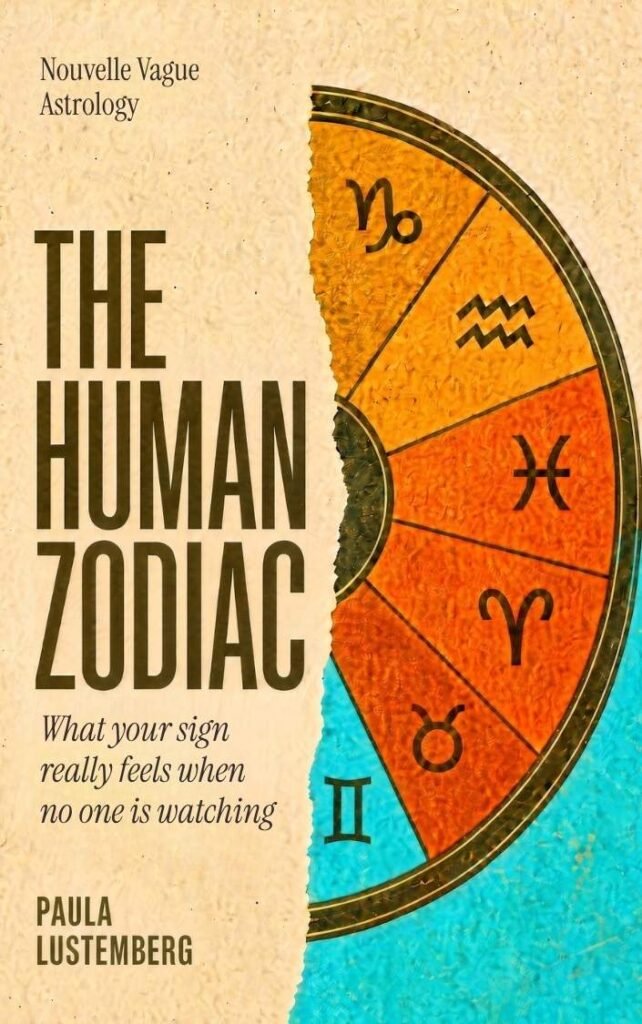
Do you think you know your sign? Think again. Many astrology books try to explain who you are. The Human Zodiac invites you to inhabit it. A radical immersion in the twelve signs of the Zodiac, where the archetype is not described but lived.
Antiscia and Contrantiscia points represent a lesser-explored dimension of the natal chart, based on the symmetry of zodiac signs with respect to the solstice axis (0° Cancer – 0° Capricorn). These points act as “energetic reflections” and can reveal hidden information about how certain planets operate within the chart.
The Principle of Light and Darkness in Antiscia
The Cancer-Capricorn axis marks the points where the solstices occur: the summer solstice in the Northern Hemisphere and the winter solstice in the Southern Hemisphere. At this time of the year, the extremes in the duration of day and night are reached. The signs that reflect across this axis have the particularity of sharing an equivalent distribution of light and darkness at different times of the year.
For example, when the Sun is at 1° Cancer (the beginning of summer in the Northern Hemisphere), the amount of sunlight available in a day is similar to the amount of darkness present when the Sun is at 29° Gemini. This correspondence occurs in all Antiscia sign pairs, suggesting a subtle connection between them, based on the way light and shadow balance throughout the annual cycle.
Why Does This Principle Apply to All Signs?
Although the solstitial axis is defined by Cancer and Capricorn, the symmetry of the ecliptic allows this relationship to be reflected in all zodiac signs. The key lies in the placement of the signs within the zodiac circle and their equidistance from the solstices. Each sign has a mirror point where the duration of day and night is equivalent at different times of the year.
Thus, Antiscia signs are linked by their relationship with solar light along the ecliptic and the way they experience the balance between day and night. This makes them connected energetic points, where planets located in these degrees reflect qualities that can manifest in a hidden or complementary way in astrological interpretation.
What Are Antiscia?
The Antiscia of a planet are points that maintain the same distance from the solstitial axis but are reflected in the opposite sign within the same zodiacal hemisphere.
How to Calculate an Antiscion
If a planet is at 10° Leo, its Antiscion will be at 20° Taurus because:
10° Leo is 40° from the solstitial axis at 0° Cancer.
Counting 40° from 0° Capricorn in the opposite direction, we reach 20° Taurus.
Meaning of Antiscia
Acts as a point of hidden manifestation of the planet’s energy.
In synastry, a connection with an Antiscion can indicate a subtle and instinctive affinity.
May represent talents or personality traits that emerge in specific situations.
Can act as “bridges” between energies that do not normally form direct aspects.
What Are Contrantiscia?
Contrantiscia are the points opposite to Antiscia, functioning as a kind of hidden opposition.
How to Calculate a Contrantiscia
If a planet is at 10° Leo, its Contrantiscia will be at 20° Scorpio.
Meaning of Contrantiscia
Can act as a “hidden challenge” or a point of integration of planetary energy.
In synastry, it may generate magnetic attraction with implicit tension.
Can indicate an external influence pushing the individual to integrate their potential.
Represents a balance between light and darkness in terms of solar cycles.
Antiscia and Contrantiscia by Sign
Aries → Antiscion in Virgo, Contrantiscia in Pisces
Taurus → Antiscion in Leo, Contrantiscia in Aquarius
Gemini → Antiscion in Cancer, Contrantiscia in Capricorn
Cancer → Antiscion in Gemini, Contrantiscia in Sagittarius
Leo → Antiscion in Taurus, Contrantiscia in Scorpio
Virgo → Antiscion in Aries, Contrantiscia in Libra
Libra → Antiscion in Pisces, Contrantiscia in Virgo
Scorpio → Antiscion in Aquarius, Contrantiscia in Leo
Sagittarius → Antiscion in Capricorn, Contrantiscia in Cancer
Capricorn → Antiscion in Sagittarius, Contrantiscia in Gemini
Aquarius → Antiscion in Scorpio, Contrantiscia in Taurus
Pisces → Antiscion in Libra, Contrantiscia in Aries
Practical Application in Interpretation
In the Natal Chart:
A planet in its Antiscion may manifest its qualities indirectly but powerfully.
A planet in its Contrantiscia may represent a point of tension requiring integration.
In Transits:
If a transiting planet is positioned over an Antiscion, it may activate latent potential.
If a transit occurs over a Contrantiscia, it may generate confrontation or a moment of awareness.
In Synastry:
If one person’s Sun is at the Antiscion of another’s Moon, the connection may feel deep and intuitive.
If someone’s Mars is at the Contrantiscia of another’s Venus, there could be strong but challenging magnetism.
Practical Example
If you have Venus at 15° Scorpio:
Its Antiscion is at 15° Aquarius, and its Contrantiscia at 15° Leo.
A Jupiter transit over 15° Aquarius could bring unexpected opportunities in love or finances.
A relationship with someone who has Mars at 15° Leo could feel intense and challenging.
Conclusion
Antiscia and Contrantiscia are rarely explored tools in modern astrology, but their application can greatly enrich the interpretation of the natal chart, transits, and interpersonal relationships. In Contemporary Mystical Astrology, we understand them as opportunities to discover hidden connections and work with complementary energies in our lives, using the principle of light and darkness as a guide for energetic integration.
✨ Have you explored Antiscia and Contrantiscia in your natal chart? Share your experience in the comments.
We use cookies from third party services for marketing activities and to offer you a better experience and we follow GDPR policy. Read more by clicking "Privacy Preferences".