If you think Moon conjunct Saturn is synonymous with emotional coldness or blockage, look closer.
The Moon is the stomach of the chart: it absorbs, stores, digests the world into mood, habit, and body memory. It eats whatever happens and turns it into “this is how I am.” It doesn’t think. It feels raw.
Saturn is the building inspector: shows up with the rulebook, the stopwatch, and the invoice. Doesn’t kill the party, just makes it last. Sets limits, charges time taxes, turns everything into construction material. Not cold, but demands that what you build doesn’t collapse with the first rain.
The conjunction is when these two sit at the same table and share the same plate. The Moon wants to feel now. Saturn wants that feeling to go through customs, pay duties, and become something that holds. The result isn’t less emotion: it’s emotion with specific gravity. Like whisky you don’t shoot because it burns too much and leaves a mark. Neither repression nor punishment. Just another method: the tide that rises slowly, stays, and leaves the beach changed when it pulls back.
Moon conjunct Saturn doesn’t mean emotional coldness or repression, but a deep, slow, structural processing of feelings. Whoever has it doesn’t live emotion as an instant outburst, but as an experience that moves in, gets examined, and turns into anticipated memory. The person has stared so long at their inner world that they know where it will hurt before it starts. They don’t avoid pain: they condense it, endure it, give it shape. Emotion doesn’t drop by like a visitor; it pulls up a chair, stays for a season, and when it leaves, something is written on the wall.
At its core, it’s the ability to turn affective immediacy into conscious duration, finding in structure and patience a trade for inhabiting the terrible and the beautiful. The date you cancel because you already felt the ending before he opens his mouth. The text that doesn’t come out until the wound has scabbed and no longer bleeds in public. The love lived as construction work instead of a one-night fire: brick by brick, with municipal permits and everything.
If you think Moon conjunct Saturn is synonymous with coldness or emotional blockage, look closer. It’s not distance. It’s another rhythm. As if immediacy turned into memory ahead of time. What happens already happened a while ago… or hasn’t happened yet. That’s why there’s no rush to react, no need to overflow. The intensity doesn’t disappear: it condenses. And when it condenses, it gains weight, form, duration.
Saturn doesn’t steal depth from the Moon. It steals the screaming. It gives it a job: find the right structure so what you feel doesn’t evaporate in the first sob. This conjunction doesn’t avoid disaster; it just archives it before it explodes and later uses it as building material. That’s why someone with this placement doesn’t write from the outburst, but from the memory of the outburst. From the emotion that survived the test of time.
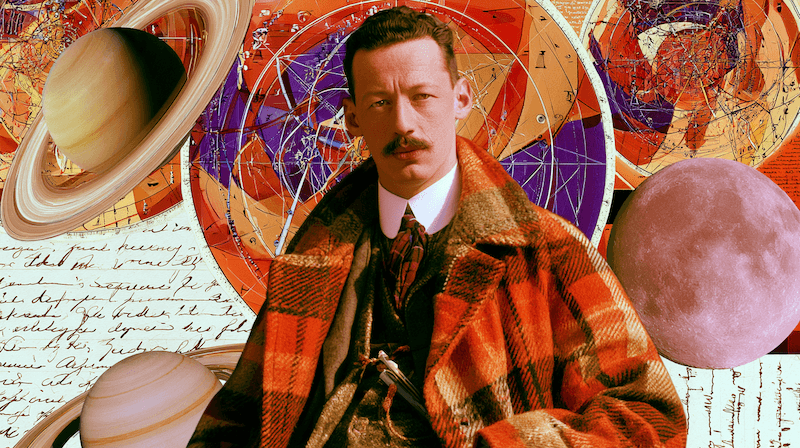
Far from a punishment, Moon-Saturn is a trade: the art of enduring the terrible without stopping naming the beautiful. Like Rilke, with his Moon in Aquarius loaded with Saturn and Mars, who didn’t cry hot but carved verses in eternal winter. The emotion arrives, sits down, pays rent in early wrinkles and heavy phrases. When it finally moves out, the house is different: heavier, more habitable for whoever already knows that emptiness also has structure.
From the Astrology of Conflict to the Ontology of Love: A Look at Venus Opposite Saturn
Conventional astrology often speaks to us in the language of internal conflict: “Your Venus desires love, but your Saturn is afraid of it.” This view, while useful for introspection, can be limiting. It presents a caricature of ourselves, divided into warring parts.
What if we change the question? Instead of asking “why do I suffer in love?”, we can ask: what is the specific form, the unique texture, with which this being embodies the phenomenon of love?
Under this ontological gaze, an aspect like Venus opposite Saturn ceases to be a “problem” to solve and becomes the precise description of a particular architecture of bonding. They are no longer two opposing forces, but the two pillars of a single, solid system.
This is how someone with Venus opposite Saturn loves
1. They Love with Boundaries. Union (Venus) is defined and consolidated through clear contours (Saturn). This is not love as an indistinct fusion, but as a pact between well-defined territories. The “us” is built with respect for the individual “I’s.” Loyalty is not a feeling; it is a structural agreement.
2. They Love with Patience. Time is not an enemy that wears things down, but an ally that grants solidity. Love is not a sudden strike one receives, but a seed that is sown and cultivated. The value of the bond is measured by its capacity to last, to withstand the seasons. Beauty (Venus) resides in the patina left by the years (Saturn).
3. They Love with Seriousness. Love is not a game or a pastime. It is a matter of weight and consequence. There is an inherent dignity in the act of bonding. Lightness can be interpreted as frivolity. The depth of feeling is demonstrated with actions, not just words.
4. They Love through Duty (in the highest sense). Commitment is not a burden, but the backbone of affection. “I love you” translates to “I am here,” “I keep my word,” “I build with you.” Love is expressed through constancy and assumed responsibility. It is the materialization of affection into structures of mutual care.
5. They Love What Endures. There is a natural affinity for the classic, the tried-and-true, for what has passed the test of time. The new and fleeting hold less appeal than what promises (and demonstrates) permanence. The beauty of the ancient, of tradition, of a kept promise, resonates deeply.
In essence:
It is not that this person “has difficulties” loving. It is that their love has the texture of stone and noble wood, not that of a flower and a firework.
Their way of loving is neither worse nor better. It is architectural. Where others see a wall of restriction (Saturn), they see the blueprint for a temple (Venus). Their challenge is not to “get Saturn off their back,” but to learn to recognize the severe and lasting beauty of their own design for love.
An Example: Victor Hugo
Victor Hugo’s chart perfectly embodies this union between the sublime of love (Venus in Pisces in the 4th House) and law, duty, and social structure (Saturn in Virgo in the 10th House).
This is not an opposition of conflict, but the source of his fundamental literary theme: the struggle of the human heart (Venus/Pisces) against the rigid structures of society and destiny (Saturn/Virgo).
Here is an excerpt from Les Misérables that is the very personification of this opposition. The words of Bishop Myriel to Jean Valjean are the exact moment when Grace and Love (Venus in Pisces) redeem and restructure a life marked by Law and Condemnation (Saturn in Virgo).
Excerpt from Les Misérables
“Jean Valjean, my brother, you no longer belong to evil, but to good. I have bought your soul from thoughts of perdition and I give it to God.”
This was so overwhelming, so unexpected, that the convict turned pale and began to tremble. He could not withstand the shock. His soul was thrown into disarray, and he lost consciousness. He fell to his knees before the Bishop, without uttering a word, his head bowed, in an attitude of prostration.
The Bishop continued, his voice solemn and sweet:
“And do not forget, never forget, that you have promised to use this money to become an honest man.”
How this text embodies the Venus-Saturn opposition:
Venus in Pisces (4th House): The love here is unconditional, merciful, and redemptive. It is love as a cosmic force of forgiveness (Pisces) that springs from the home, the spiritual family, and the deepest compassion (4th House). The Bishop does not judge; he buys a soul for God. It is the purest, most selfless act of love.
Saturn in Virgo (10th House): Structure manifests as social Law, moral duty, and contract (Saturn), examined with meticulousness and precision (Virgo) in the realm of public life and destiny (10th House). Jean Valjean is the failed product of that Saturnine system: condemned for stealing bread.
Hugo’s genius lies in not choosing a side, but in showing their opposition as a forge: Love (Venus) does not destroy the law (Saturn); it transcends it and gives it a new meaning. The Bishop does not break the law; he fulfills it on a higher level: the law of God, which is love.
The phrase “you have promised to use this money to become an honest man” is Saturn in its essence: it is a duty (Saturn) imposed upon him, a contract that structures his new life. But that duty is born from an act of Venusian grace.
In conclusion, Victor Hugo’s work would not exist without this opposition. It is the crucible where his worldview is forged: the monumental clash between the human heart and the established order, and the redemptive possibility that love can impose a new, deeper, and more human law upon the ruins of the old.
It was not an internal conflict that paralyzed him, but a creative tension that fueled his entire literary epic.
When Moon and Jupiter are in square in a natal chart, a specific emotional architecture is formed. The Moon processes from familiarity and security. Jupiter operates as a mechanism of constant expansion. The square creates productive friction between these two systems.
This is how the individual’s architecture functions in this particular aspect. The Moon-Jupiter square is just one element within a complex astrological architecture that includes multiple planets, houses, and aspects. This specific aspect contributes coherence to the individual’s totality, establishing a functioning pattern that integrates with the rest of the natal configuration.
The system requires expanded context to process emotions
The lunar mechanism of comfort and familiarity cannot operate alone because Jupiter introduces an automatic demand for greater meaning. Emotions are not validated simply by being felt; they need philosophical context, epic narrative, broader framework of understanding to register as valid in the system.
For example: a minor argument with a friend is not processed as “I’m upset with John” but as “what does this say about friendship, about expectations, about how human communication works?”
It functions through automatic amplification
This configuration processes any emotional input by automatically converting it into material for expanded reflection. A minor experience is amplified toward general principle, a specific emotion becomes worldview. There is no filter that keeps feelings at small scale; the system operates through constant magnification.
For example: feeling nostalgia for a song becomes reflection on the passage of time, memory, the meaning of recollections in the construction of identity.
Comfort generates systemic insufficiency
What should nourish and calm (lunar function) registers as narrowness before the Jupiterian demand for growth. Security activates a limitation response. The system doesn’t reject comfort but comfort alone doesn’t satisfy the architectural requirements. It needs challenge, expansion, open horizon to function correctly.
For example: a stable and secure job may generate restlessness because the system registers stability as stagnation and demands growth, learning, new horizons to feel emotionally activated.
It operates from the logic of abundance
The system automatically tends toward emotional excess, expanded inclusion, giving more than required. It’s not a conscious decision but a basic mode of functioning. Jupiterian amplification makes it more efficient to operate from abundance than to calculate exact measures. Generosity functions as operative mechanics, not as moral choice.
For example: when helping someone with a problem, the system automatically offers more time, more resources, more support than the situation technically requires, because operating from abundance is simpler than calculating the exact amount.
It requires faith as systemic fuel
This architecture needs expanded contexts of meaning to activate emotionally. It must sustain confidence that a broader logic is functioning, even if not completely visible. This is not about religious belief but about systemic capacity to process possibilities that exceed what is immediately verifiable. Faith operates as necessary fuel, not as optional addition.
For example: facing a difficult situation, the system needs to trust that “this makes sense within something bigger” or “this is teaching me something important” to process the experience without collapsing emotionally.
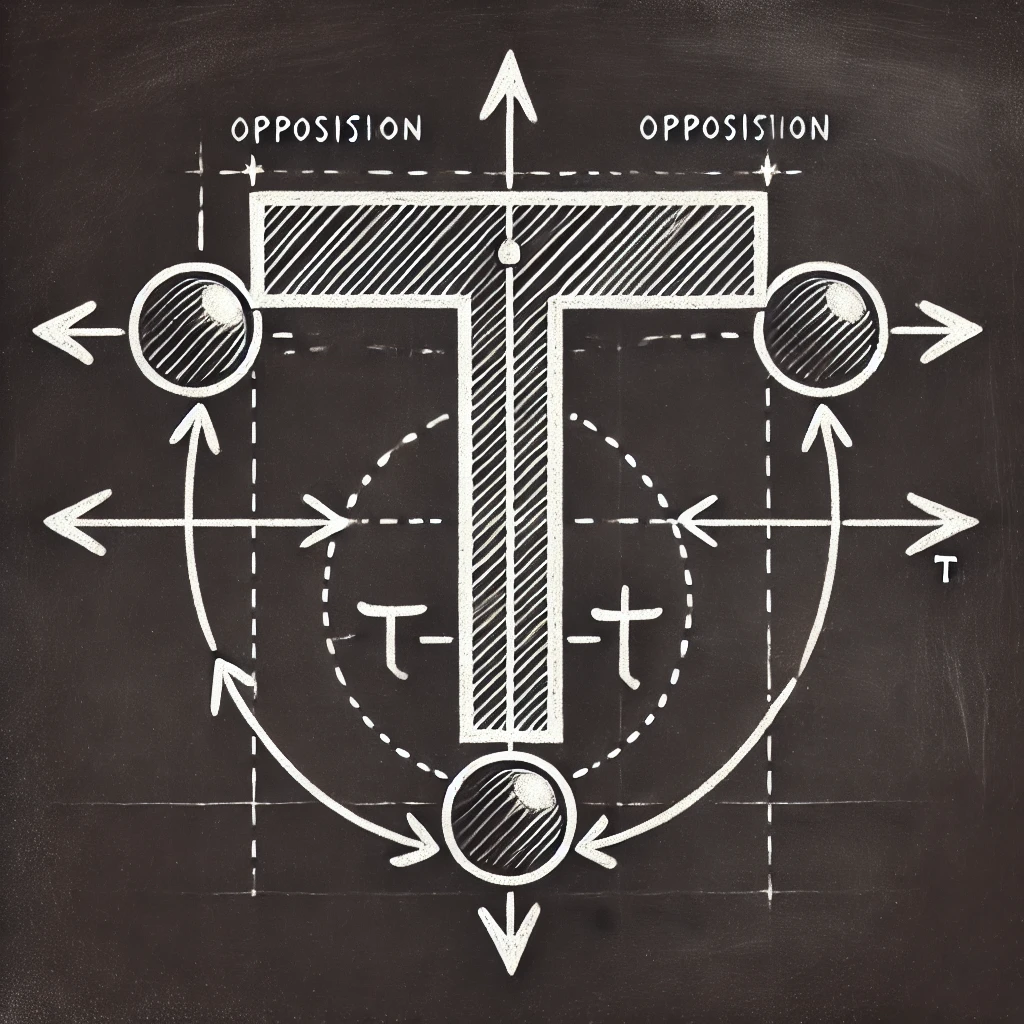
Astrology whispers to us that aspects are more than simple geometric connections between planets: they are energetic currents, circuits that spark and strain the soul in its search for expression. And in this intricate design, few structures speak with as much intensity as the T-Square. A triangle of fire, a crucible where the psyche confronts its own impulses in a dance between what it desires and what it needs.
The T-Square: The Vertex of Paradox
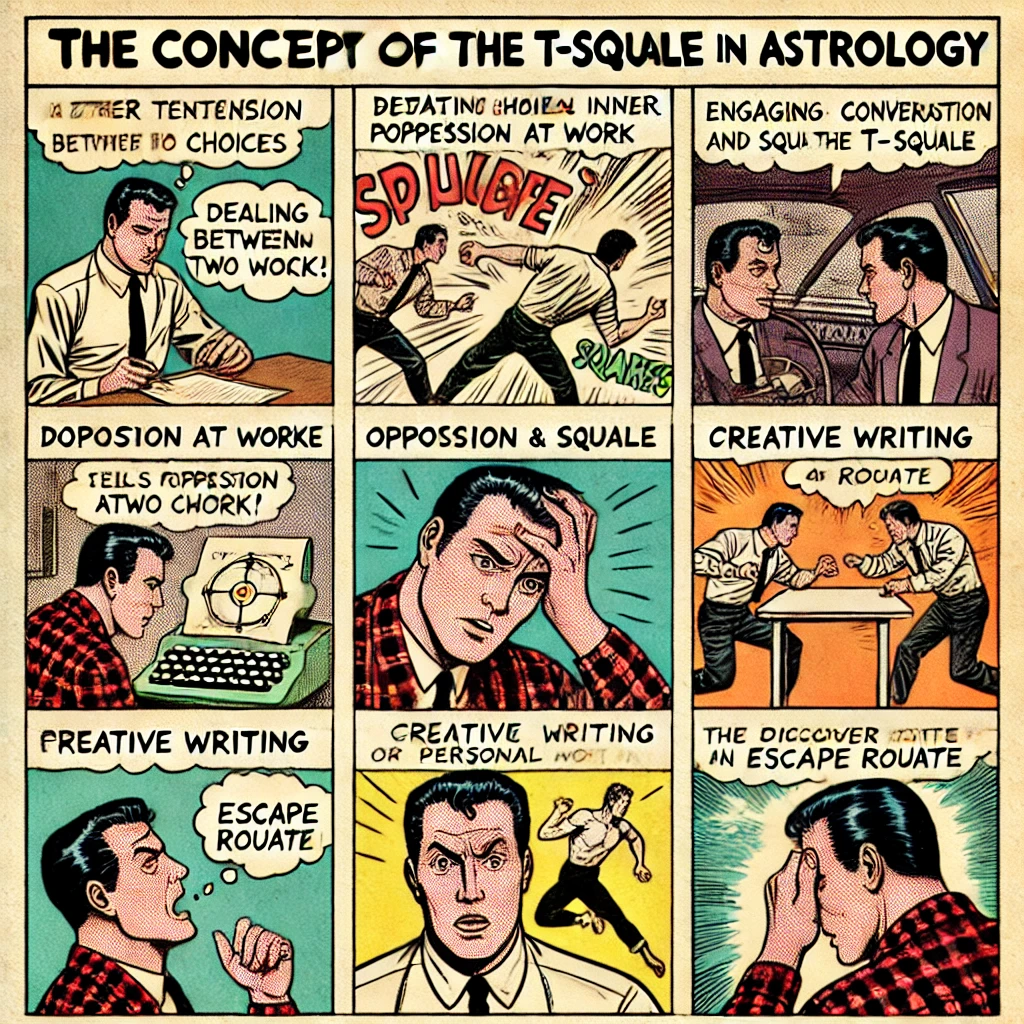
Visualize the T-Square as a grand battle where two planets in opposition pull at a third force—a planet receiving both squares. This planet is the epicenter of the conflict, the force of containment, and also the key to transcending the tension.
• The opposition presents the dilemma between two extremes, two forces staring each other down in challenge. It is a duel of energies seeking balance.
• The squares create friction, internal resistance that prevents easy resolution, forcing movement, discomfort, and growth.
• The focal planet is the crisis node, feeling pressure from all angles, compelled to act without the option of avoiding the demand for action.
But here lies the secret of the T-Square: the solution is not found by fighting against the tension but by channeling it. Like lightning seeking the ground, energy needs an escape route to release its charge and transform it into creative impulse, constructive action, or evolutionary resolution.
Escape Routes: Channeling the Force
1. The Flowing Transit: Planets in Sextile or Trine to the Focus
If a planet forms a sextile or trine to the focal planet, it acts as a natural channel. The accumulated tension finds a pathway, a harmonic rhythm that smooths friction and allows conflict to be expressed fluidly.
Example:
A T-Square with Mars in the 10th House receiving squares from the Moon in the 7th and Saturn in the 1st could find its escape route in Jupiter in the 3rd, where a trine would ease the burden through verbal expression, teaching, or physical movement.
2. The Opposite Point: The House of the Void
Every T-Square has a missing point, an empty space in the sign opposite the focal planet. This point acts like a shadow, a dormant possibility that, when activated, can serve as a counterbalance to the pressure.
Example:
A T-Square with Venus in Aries in the 5th House receiving squares from Pluto in the 8th and the Moon in the 2nd could find its balance in Libra in the 11th House. The solution might lie in collaboration with others, learning to negotiate desires, and the art of diplomatic relationships.
3. The Expression of the Focal Planet’s House
Sometimes, the key is not in finding an external outlet but in recognizing that the focal planet is asking for expression within its own house. This house tells us in which area of life the tension manifests and where energy is best directed.
Example:
If a T-Square has Mercury in the 4th House as the focal point, the escape lies in communication and giving voice to emotions, writing, or structuring thoughts within the home or personal space.
The T-Square Within the Birth Chart as a Whole
Nothing in a birth chart functions in isolation. Although the T-Square may feel like a constant source of tension and conflict, it is actually part of the greater framework of the chart, playing a role in the individual’s development.
It is not something that needs to be ‘fixed’ or eliminated but rather something to be understood in terms of how this challenging structure serves the whole. It may be the driving force that pushes the person toward seeking new solutions, the impulse that compels them to integrate different parts of themselves, or the challenge that shapes their life path.
Conclusion: The Dance of Tension
The T-Square is not a dead-end street but rather a combustion engine that propels the soul into action. Its challenging nature is not a condemnation but an invitation to master energy. When we understand its escape routes, tension ceases to be an obstacle and becomes fuel.
Like lightning grounding itself in the earth, like a volcano releasing its pressure through lava, the key is to find the outlet that transforms force into creation. And in that transformation, the T-Square ceases to be a conflict and becomes the engine of destiny.
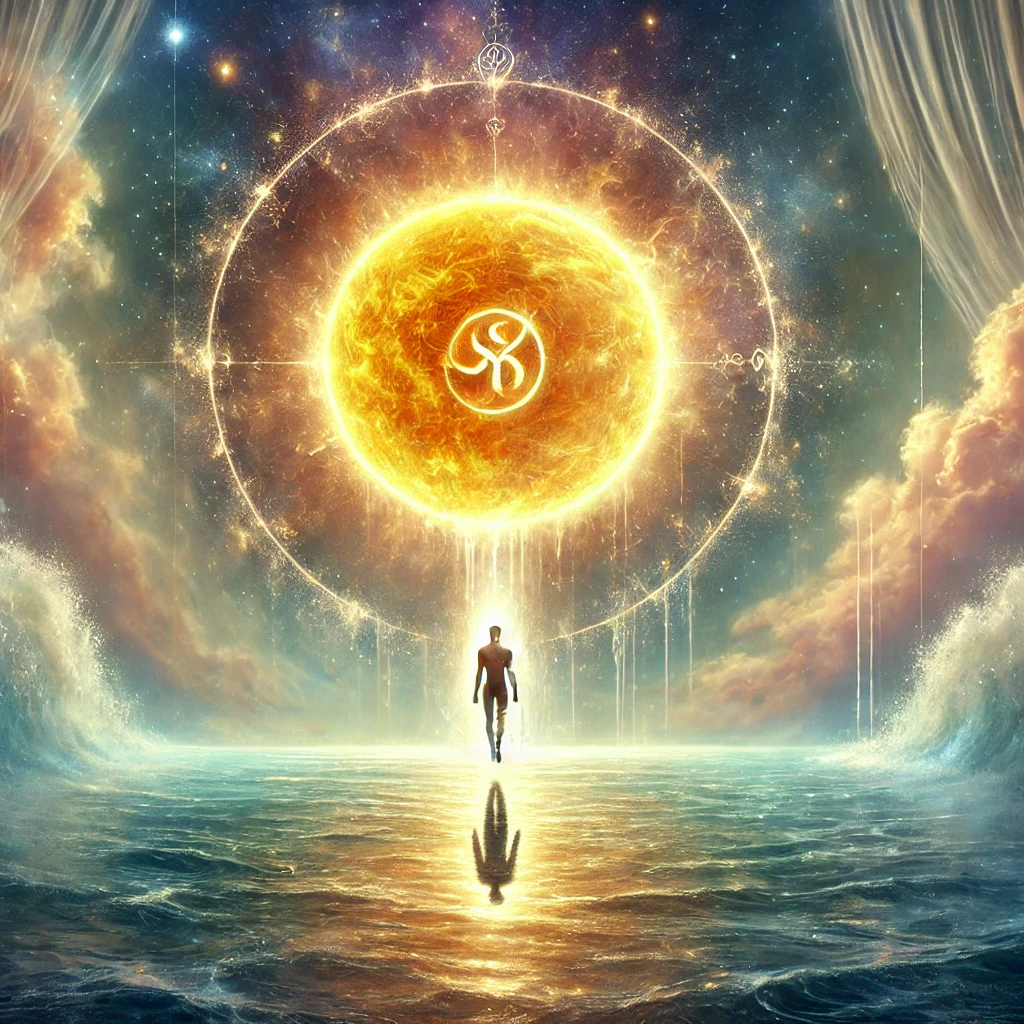
The conjunction of the Sun with Neptune represents a path of integration between individuality and the transcendent, where the sense of “self” is not defined by fixed boundaries but by its ability to dissolve and transform in alignment with something greater.
This aspect suggests that identity is not meant to be asserted with rigidity but to flow, to be understood as part of a larger process, and to become a channel of inspiration, compassion, and expanded perception.
The Evolutionary Journey of the Sun Conjunct Neptune
An Expanding Self: Beyond a Fixed Identity
A person born with this conjunction is not designed to define themselves in rigid terms. Their identity is like water—changing, absorbing, adapting, reflecting others. This may manifest as a feeling of not fully belonging to the concrete world or not fitting into fixed categories. At its highest expression, this aspect offers an opportunity to realize that identity is not something imposed but something experienced and transformed.
The Dissolution of the Ego: Vulnerability and Spiritual Strength
Throughout their journey, individuals with this aspect face moments of extreme openness, where the ego seems to blur entirely. This can lead to experiences of merging with the whole, heightened sensitivity, or a sense of defenselessness in the face of life. However, the key lesson is that true strength does not come from building walls but from learning to channel vastness without being lost in it.
Becoming a Channel of Inspiration and Healing
The evolution of this Sun lies in understanding that its existence is not meant for personal recognition but for serving as a bridge between the tangible and the intangible. This placement facilitates deep connections with spirituality, art, healing, or any form of expression that translates the ineffable into something others can grasp.
The Challenge of Embodiment
With such a strong inclination toward the subtle, the greatest challenge is anchoring the experience in the material world. Establishing boundaries, maintaining a clear direction, or structuring one’s path without feeling like it sacrifices the essence can be difficult. Growth involves finding a way to manifest this energy without fragmentation—without getting lost in illusions or the tendency to escape from the earthly and concrete.
The Mastery of the Sun Conjunct Neptune
At its highest level, this conjunction teaches that true identity does not need to be rigid or forcefully asserted. Its presence does not impose; it influences. It is not about fighting to define oneself but about understanding that one is part of something greater, and the most authentic contribution comes from this ability to connect, resonate, and reflect.
The Evolutionary Purpose of a Sun-Neptune Conjunction
This placement does not seek a closed identity or a linear trajectory. Its purpose is to learn to flow with awareness, to integrate sensitivity without being lost in it, and to discover that its greatest strength lies in its ability to unite worlds: the material with the spiritual, the visible with the invisible, the individual with the collective.
This is a Sun that does not shine alone but illuminates through its fusion with its surroundings. It is a beacon in the mist, a reflection in the current, a flame that dissolves and reappears in new forms—never losing its essence.
A Self That Dissolves to Redefine Itself
The Sun conjunct Neptune marks a path of integration between personal identity and a broader, more subtle reality. For those born with this aspect, evolution does not lie in consolidating a strong and defined “self” but in learning to sustain a flexible identity without losing oneself in it. It is about understanding that existence is not just an individual journey but a dance between the personal and the transcendent.
This is not a Sun that shines in isolation; it illuminates in union with its environment. Its purpose is to find a way to express itself without completely dissolving into the external, without losing its inner direction in an ocean of influences.
One of the greatest challenges for those with this conjunction is learning to differentiate between their own energy and that of others. Their energetic field is permeable, absorbing external emotions, desires, and expectations without noticing, which can lead to a loss of clarity about their true self.
Evolution comes from learning to feel without being carried away, to connect without dissolving. The challenge is not to shut down sensitivity but to channel it consciously.
Finding a Purpose Without a Fixed Identity
The Sun represents life direction, but with Neptune in conjunction, clarity about who one is and what one wants may be obscured by a fog. Often, individuals with this aspect feel that their motivations shift over time or that their purpose is not something concrete but a flow of experiences and perceptions in constant transformation.
Growth happens when they realize that their path does not need to be precisely defined but is built as they move forward. It is not about finding a fixed goal but about learning to move in harmony with what life presents.
Integrating Inspiration with Concrete Reality
There is a tendency to inhabit the world of symbols, imagination, and inspiration, which can lead to avoiding earthly responsibilities or feeling that the mundane is too heavy. The difficulty does not lie in sensitivity but in the lack of grounding in the material world.
The evolutionary challenge is to bring the ethereal into tangible reality—expressing the abstract through art, spirituality, service, or any medium that allows inspiration to take form and create a real impact.
Distinguishing Spiritual Connection from Idealization
People with this aspect often feel a deep need to merge with something greater, but sometimes this search manifests through the idealization of people, relationships, or causes. There is an inclination to see the divine in everything, which can lead to disillusionment when reality does not align with the created image.
The lesson here is to maintain a connection with the transcendent without losing discernment. Faith should not be blind but conscious; surrender should not be absolute but balanced.
The Path of Integration
The Sun conjunct Neptune is not meant to shine in a conventional way but to reflect, inspire, and connect. A person with this aspect evolves when they learn to:
✔ Create healthy boundaries without shutting down their sensitivity. ✔ Flow with their path without needing to define it in absolute terms. ✔ Bring their inspiration into the real world in tangible forms. ✔ Connect with the transcendent without being lost in illusions.
When these challenges are integrated, their presence becomes a guide—a channel of deep sensitivity that brings light, not through ego assertion, but through connection with something greater.
Once upon a time, there was a woman who was only attracted to men who were out of her reach. It wasn’t that she was a masochist, nor that she had “self-esteem issues,” as her friends told her. It was something much simpler and yet stranger: her internal system had learned that true love had to cost something, prove something, earn something. Available men seemed suspicious to her, like poisoned gifts or counterfeit bills.
Once upon a time, there was a man who could only commit to women who needed to be “rescued” from something: debts, toxic ex-partners, stagnant careers, complicated families. It wasn’t that he had a savior complex, as his friends told him. It was something much more subtle: his internal system had calibrated that real love had to come accompanied by a project, a mission, a tangible demonstration of value. Women who had their lives figured out seemed boring to him, as if they were missing something essential that he could provide.
Venus in square with Saturn. But they didn’t know this, of course.
The Misunderstanding of the Century
Popular astrology would say these people have “difficulties in love” or “fear of commitment.” Therapists would talk about childhood wounds. Self-help coaches would sell them mantras about self-love.
They’re all wrong.
What really happens is that somewhere in their internal architecture, two departments that should collaborate have declared war on each other. The Department of What I Like (Venus) and the Department of What Is Possible (Saturn) speak completely different languages. It’s as if one spoke in colors and the other in numbers, and both were convinced the other is an idiot.
The Internal Theater
Imagine for a moment that your psyche is an absurd theater where the same play is performed every night. On the left stage, Venus acts out her monologue: “I like this, this resonates, this is beautiful, let’s get closer.” On the right stage, Saturn presents his report: “But is it realistic? Where’s the evidence? How much will it cost? What guarantee do we have?”
When these two characters are in square or opposition, the play becomes a Kafkaesque tragicomedy. Venus tries to evaluate the beauty of a rose, and Saturn interrupts asking about the price, duration, and maintenance conditions. Saturn attempts to build a solid structure, and Venus complains that she doesn’t like the color and the texture is horrible.
The result: neither can do their job properly.
The Daily Symptoms of This Internal War
If you have Venus in tension with Saturn, your life is full of small ironies that no one else understands:
You fall in love with what you can’t have, and distrust what comes easily. As if your heart had been programmed to beat only in difficult mode.
Pleasure generates guilt until you’ve met some invisible quota of deservingness. It’s like having an internal doorman who always asks for documents you don’t know how to obtain.
Your tastes need external justification. It’s not enough that you like something; it also has to be liked by some imaginary jury of responsible and serious beings.
In relationships, you organize love as if it were a business. It’s not that you don’t feel; it’s that feeling seems unprofessional to you.
The Secret Mechanics
Here’s what no one tells you: this isn’t a psychological problem. It’s a translation error.
Venus evaluates by immediate resonance. She sees a painting and instantly knows if it’s beautiful. She tries food and knows if she likes it. She meets a person and feels attraction or indifference. Her logic is: “If it resonates, it’s valid.”
Saturn evaluates by temporal sustainability. He looks at that same painting and wonders if the artist will still be relevant in ten years. He tries the food and calculates calories and monthly budget. He meets the person and does a mental background check. His logic is: “If it works over time, it’s valid.”
Both are right. Both are wrong. Neither listens to the other.
The Never-Ending Story
In square, this war is constant but internal. Your Venus finds something beautiful, your Saturn finds seventeen objections. Your Saturn builds something solid, your Venus gets bored because there’s no magic. It’s like living with an internal critic who’s never satisfied and an internal dreamer who’s never practical.
In opposition, things become even more dramatic. You alternate between being purely Venusian (everything for pleasure, screw the future) or purely Saturnian (everything for responsibility, screw happiness). As if you were two different people taking turns managing your life, and neither trusts the other.
The Impossible Translation
But here’s where it gets interesting: what if it weren’t a war but a translation problem?
What if Venus and Saturn were seeking the same thing –genuine value– but from completely different maps?
Venus says: “This is valuable because it resonates.” Saturn says: “This is valuable because it endures.”
The revelation: both are talking about value. One just measures it in vibrations and the other in miles traveled.
The Solution That Isn’t a Solution
Classical astrology would tell you that you have to “balance” these planets, as if it were a matter of giving equal attention to each one. Self-help books would tell you that you have to “integrate” your Venusian and Saturnian sides.
But that’s not the truth.
The truth is that Venus and Saturn in tension don’t need couples therapy. They need a translator.
They need to learn that when Venus says “this is beautiful,” she might be pointing to something worth sustaining over time. And when Saturn says “this is solid,” he might be describing a different kind of beauty, slower, but equally real.
The Open Ending
Our woman from the beginning, the one who was attracted to men out of her reach, understood something one day. It wasn’t that she was seeking impossible love. It was that her system had confused difficulty with value, obstacle with depth.
Our man, the one who only committed to women who needed rescue, had a similar revelation. It wasn’t that he wanted to be a savior. It was that he had confused complexity with connection, project with purpose.
When both learned to translate between their two internal languages, they discovered something liberating. She could find men who were both resonant and available, both attractive and real. He could connect with women who were already complete, discovering that love didn’t need to come with a to-do list. Neither had to change their tastes nor lower their standards. They just had to update their internal dictionaries.
Because in the end, Venus in tension with Saturn isn’t an astrological curse. It’s a miscalibrated superpower. The ability to find value that endures, beauty that works, pleasure that sustains itself. You just have to learn to use the instruction manual.
And that, dear readers, is something no magazine horoscope will explain to you. For that, you need to understand how your internal architecture really works, beyond the usual astrological recipes.
Do you recognize yourself in this dynamic? Venus-Saturn is just one of the infinite ways your natal chart can be configured. If you want to understand how your complete system works – not just this tension but all the translations your psyche makes automatically – you need to look beyond isolated aspects.
[Here you can explore how your complete natal chart works]
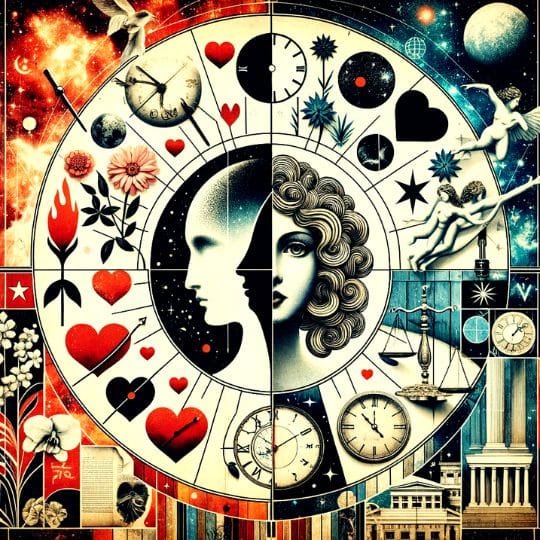
The Venus-Saturn opposition in astrology highlights the tension between emotional needs and responsibilities. Venus and Saturn are planets with contrasting energies, making this aspect particularly significant.
Venus symbolizes love, beauty, pleasure, and relationships. It represents harmony, attraction, and what we value. On the other hand, Saturn is associated with structure, discipline, limitations, and responsibilities. Its energy focuses on reality, maturity, and learning through challenges.
When Venus and Saturn are in opposition, a “push and pull” dynamic is created between these energies. This opposition can manifest in various ways:
Desire vs. Reality: There may be a strong desire for harmonious relationships, beauty, and pleasure (Venus), but at the same time, these aspirations may be challenged by responsibilities, limitations, or life lessons (Saturn).
Relationships vs. Solitude: The pursuit of love and connection (Venus) may face the need for solitude or constraints in relationships (Saturn), creating a balance between connecting with others and maintaining one’s own space and autonomy.
Values vs. Obligations: Venus in opposition to Saturn can reflect a conflict between what we personally value and the obligations or responsibilities we must fulfill, leading to a readjustment of priorities.
The Venus-Saturn opposition can be seen as a time to reevaluate our relationships, values, and what we consider beautiful and pleasurable. Although this aspect can present challenges, it also offers the opportunity for emotional growth and maturity in our relationships, learning to balance love and pleasure with reality and responsibility.
Potentials of the Venus-Saturn Opposition
With the Venus-Saturn opposition, reaching the highest octave would imply optimally integrating the energies of both planets, finding a balance between love and commitment, pleasure and responsibility, beauty and reality. Let’s see how this might manifest:
Balance between Love and Commitment: The highest octave of this opposition would involve using Saturn’s structure and responsibility to shape and support Venus’s desires and relationships. This means seeking realistic relationships and working towards them with a mix of love and practicality.
Maturity in Relationships and Values: Leveraging Venus’s energy to seek relationships and pleasures, while using Saturn’s influence to establish healthy boundaries and understand the importance of maturity and commitment.
Responsible Pleasure: Maintaining a positive attitude towards love and pleasure (Venus) while recognizing and addressing the realities and challenges of relationships and commitments (Saturn). This implies enjoying but also being realistic and aware of responsibilities.
Beauty within Reality: Using restrictions or limitations as a means to appreciate and find beauty and love in reality, understanding that true love and lasting relationships often require work and commitment.
Balanced Success in Relationships: Achieving satisfying and loving relationships not only in terms of romance and pleasure (Venus) but also in developing a solid and sustainable foundation for love and relationships (Saturn). The ‘highest octave’ of the Venus-Saturn opposition invites a balance between the pursuit of love and pleasure, and the understanding of the responsibilities and realities of relationships. It implies learning to love sustainably and responsibly, recognizing that lasting and meaningful relationships come from the integration of love and pleasure with structure and responsibility.
Balanced Relationship Creators
“The search for the perfect balance” might encapsulate the Venus-Saturn opposition, reflecting the idea that we are constantly evaluating and reevaluating the balance between love, pleasure, and beauty (Venus), and responsibilities, commitments, and practical realities (Saturn).
This opposition can be seen as the work of a ‘balanced relationship creator’: someone who combines the pursuit of love, harmony, and pleasure (Venus) with the need for structure, commitment, and limitations (Saturn).
This opposition could be interpreted as a symbol of the human quest for meaningful and authentic relationships. Here, Venus represents the desire for connection, beauty, and pleasure, driving individuals to seek relationships and experiences that enrich their lives. Saturn, on the other hand, would represent the need to structure these relationships and experiences to make them lasting and realistic.
The “creation of balanced relationships” in this sense is the process of navigating through life, balancing the desire for love and pleasure with the responsibilities and limitations of the real world. It would involve a constant search for harmony and beauty in relationships (Venus) while developing a stable and sustainable framework for these relationships (Saturn).
Therefore, the Venus-Saturn opposition becomes the challenge and opportunity to balance the desire for love and connection with the practical realities and limitations of relationships, seeking a balance between enjoying life and maintaining structure and order in our relationships.
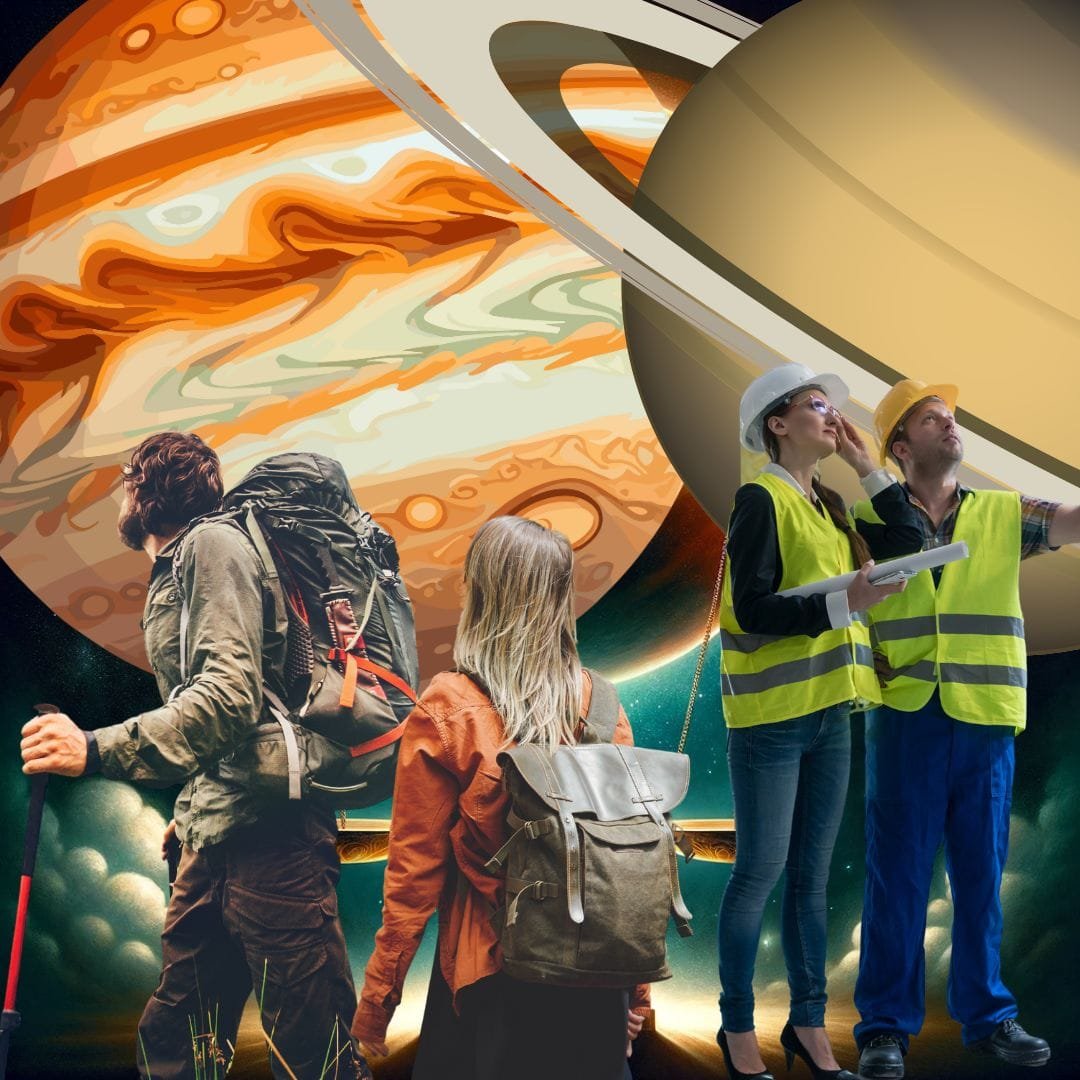
The Jupiter-Saturn opposition in astrology is a significant aspect and is interpreted as the tension between two very different forces: expansion (Jupiter) and contraction (Saturn).
Jupiter symbolizes growth, optimism, abundance, and expansion. It is associated with luck, philosophy, the pursuit of truth and knowledge, and generosity. On the other hand, Saturn represents structure, responsibility, discipline, limitations, and realism. It focuses on consolidation, maturity, learned lessons, and established structures.
When these two planets are in opposition, a kind of “push and pull” occurs between their energies. This opposition can manifest as a conflict between the desire for expansion and the need for restriction:
Growth vs. Limitation: There may be a desire to grow, explore, and expand, but at the same time, one faces limitations, restrictions, or responsibilities that require attention and prudence.
Optimism vs. Realism: Jupiter’s optimism and faith can clash with Saturn’s realistic and sometimes pessimistic approach, creating a balance between dreaming and facing reality.
Freedom vs. Structure: While Jupiter seeks freedom and exploration, Saturn insists on structure and discipline. This can manifest in the need to find a balance between these two extremes.
The Jupiter-Saturn opposition can be seen as a time of reevaluation and adjustment, where expectations and plans may need to be revisited in light of practical realities. Although it can be a challenging period, it also offers opportunities for mature and balanced growth, learning to integrate expansion with responsibility.
The Potential of Jupiter Opposition Saturn
For the Jupiter-Saturn opposition, reaching the highest octave would involve optimally integrating the energies of both planets, finding a balance between expansion and restriction, optimism and realism, freedom and responsibility. Here’s how this might manifest:
Balance between Expansion and Discipline: The highest octave of this opposition would imply using Saturn’s discipline and structure to shape and support Jupiter’s dreams and aspirations. This means setting realistic goals and working towards them with a mix of optimism and pragmatism.
Wisdom and Mature Growth: Leveraging Jupiter’s energy to expand horizons, whether through education, travel, or philosophical exploration, while using Saturn’s influence to deepen knowledge and gain practical, applicable wisdom.
Responsible Optimism: Maintaining a positive and hopeful attitude (Jupiter) while acknowledging and addressing life’s realities and challenges (Saturn). This involves being optimistic but also realistic and prepared.
Freedom within Structure: Using constraints or limitations as a means to focus and direct expansive energy towards meaningful and sustainable goals.
Balanced Success: Achieving success and expansion in life not only in material or external terms (Jupiter) but also in personal, ethical, and spiritual development (Saturn).
The “highest octave” of the Jupiter-Saturn opposition invites a balance between ambition and caution, between reaching for the stars and keeping feet on the ground. It implies learning to expand sustainably and responsibly, recognizing that true wisdom and success come from the integration of expansion and structure, freedom and discipline.
Map Makers
“The exploration of the possible” encapsulates the idea that we are constantly assessing and reassessing what is possible in our lives, seeking to expand our boundaries while remaining anchored in reality.
Another way to view this opposition is as a ‘map maker’: someone who combines exploration and the expansion of horizons (Jupiter) with structure, planning, and limitations (Saturn).
From an existential perspective, this opposition could be interpreted as a symbol of the human quest to understand and make sense of one’s existence. Here, Jupiter would represent the pursuit of meaning, purpose, and truth in a broader sense, driving individuals to explore different philosophies, cultures, and belief systems to find their place in the world. Saturn, on the other hand, would symbolize the need to structure, define, and limit these explorations to build a coherent and practical understanding of life and existence.
“Map making,” in this sense, would be the process of navigating through life, balancing the expansion of personal and spiritual horizons with the practical realities and limitations of the material world. It would involve a constant search for knowledge and experience (Jupiter) while developing a stable and sustainable framework to integrate this knowledge into daily life (Saturn).
The Jupiter-Saturn opposition can be seen as the challenge and opportunity to balance infinite aspiration with finite realities, the expansion of consciousness with the need for structure and order in life.
If you have personal planets between 15 and 29 degrees, this transit makes a strong impact on them, especially if your personal planet is at 23 degrees of a sign, which is the exact degree where there conjunction occurs. In this article we will briefly see the passage of this transit through the personal planets, taking into account the astrological aspect that they form. This is a very general look, since everything depends on the situation of the planets in the natal chart.
In all cases, the potential of Jupiter-Neptune conjunction is to transcend the limits of our perception. What this means for each one is personal. However, for everyone, it can be a period of connection with the magic of Life. The great capacity of Pisces is that this sign does not need to do anything to connect with magic. Like Neptune, Pisces represents water in a gaseous state. It can transform into mist and create a veil that confuses, or it can emanate its inner light and touch everything that exists, becoming the manifestation of cosmic energy in action.
Jupiter Conjunct Neptune in Pisces Trine or Sextile Personal Planets
It applies to planets between 15 and 29 degrees of Pisces, Cancer and Scorpio (trine); Capricorn and Taurus, (sextile).
The planets that make an aspect to this conjunction in trines and/or sextiles will feel that the Piscean energy will soften the planet in question. When it comes to the Sun and/or the Moon, we will find ourselves more serene, more compassionate, more creative and optimistic. With Mercury, our oral or written communication is embellished, and our perception becomes poetic. If it is Venus, we will feel more beautiful, kinder and loved. With Mars, more patient, more persuasive, more gentle in our actions.
Jupiter Conjunct Neptune in Pisces Conjunct the Personal Planets
The conjunction of this transit with a natal planet is very strong, especially when it is at 23 degrees Pisces. Any planet that comes into conjunction with these two giants connects with the collective unconscious. This can awaken mystical experiences as we can also be carried by the emotional currents of others.
For everyone with planets between 15 and 29 degrees Pisces, this transit can be a great opportunity to transcend illusion and connect with the true magic of life.
The conjunction of Jupiter-Neptune in Pisces is capable of expanding the fantasy that reigns in this sign so much that in the end it manages to fade it and thus reveal the beauty that exists in all aspects of reality. The beauty that Pisces sees goes beyond the aesthetic as it transcends forms. It is the beauty of essence and the understanding that everything is a sacred aspect of Creation.
Perhaps this is the gift of Jupiter conjunct Neptune in Pisces on one of our personal planets. But in order to receive it, we need to wake up from the dream that it is the world that happens to us instead of us creating our world.
With the Sun, these Pisces are going to be more Piscean than ever! This transit is very strong for the Piscean who has the Sun between 15 and 29 degrees Pisces. It is important to channel this energy with the mantra “I am”. The Sun in Pisces has the opportunity to see the mirages that stain their identity. The projections of others on their own persona, the mutability of their character that make them feel that they don’t have a personal identity… All this is going to be amplified. Focusing on oneself will allow us to discover portals to other dimensions of reality and perhaps to find the meaning of our existence. It is a great opportunity for it.
With the Moon in conjunction, the transit of Jupiter-Neptune we become immense emotional sponges. As with the Sun, during this season it is important to focus and allow emotional currents to wash over us like waves. Relax the body and flow. With this conjunction we will be able to feel the emotions that emanate from the collective unconscious and possibly we will also be able to capture beyond. Learning to discern what our emotions are and what are not is something possible with this transit, since emotions are so amplified that we can discover those that really have nothing to do with us. This is a great opportunity to understand what happens to us on an emotional level.
When the conjunction joins Natal Mercury, there is a chance to connect with intuition like never before. It may be that we can see auras more clearly! With the Jupiter-Neptune conjunction, extrasensory cognitive abilities grow like never before. They may be more sleepy than usual, since the world of dreams claims them to take them to fantastic realities that only exist in the dream world. The ability to see everything more beautiful and to perceive the multidimensionality of reality is exponential. For Mercury in Pisces, March and April will be a season of great intuition and confusion in worldly affairs. During this time it is better to dedicate to something that requires imagination instead of paperwork and schedules… since, if it was difficult before, during this transit it can become impossible. However, your intuitive intelligence may be greatly amplified.
We know that falling in love with love is a natural trait of Venus in Pisces. With this transit, this can occur in UPPERCASE. When the goddess Venus dresses as Pisces, she beautifies dreams, she hypnotizes crowds with her grace. She is music, she is a muse. Sensitivity expands amazingly with this transit. It is good to use these moments for creativity. If we are single, we run the risk of seeing everyone so, so soulful in our eyes that we can fall in love from head to toe, and once the transit passes, we can be disappointed. Venus in Pisces embodies the eleven essences of the other signs. She is the one who is capable of expressing grace in a transcendent way. Her power of attraction lies in accepting everything as valid and she is especially sensitive to the pain of others. With this transit, Venus in Pisces can transcend her own limits and connect with new realities. New interests and values may arise that allow her to expand what she has known until now.
Mars in Pisces often feels that their impulses have no definite direction. Mars is an extremely “aggressive” planet for Pisces, and with this position, it is hesitant to be assertive because Mars are afraid of harming others. With this transit of Jupiter and Neptune, individuals with Mars conjunct may feel the desire to venture beyond what they are used to. The best way to channel this energy is to dedicate to those things that matter to us, such as doing some kind of volunteering in a non-governmental organization, for example. This helps give concrete direction to our desire to help and gives great personal satisfaction.
Jupiter-Neptune conjunction in Square and Opposition
It applies to planets between 15 and 29 degrees Gemini, and Sagittarius (square); Virgo (opposition)
The square and the opposition show us challenges that, in themselves, contain great creative potential. The difficulty will be higher or lower, depending on the situation of the planets and their natal aspects. The square is experienced as a contradiction that makes us feel imprisoned between two internal needs that cannot be reconciled. In the case of this transit, what arises is the confusion between what the personal planet represents and the collective reality.
Sun square Jupiter-Neptune transiting Pisces can cause identity confusion. With the Moon it will be our emotions that can become confusing. With Mercury, it is our perception of the everyday that confuses us. With Venus, confusion occurs in our personal preferences and values. With Mars, we may find it hard to take action or feel like our initiative is losing direction.
In all cases, although it may be a time of uncertainty, illusions and disappointments, the challenge of this transit is to become aware of our individuality. During this transit it is important not to get carried away by illusions or create them ourselves even if it seems easy. This is an opportunity to define our individual identity (Sun), our emotional needs (Moon), our own ideas (Mercury), our personal values (Venus) and our desires (Mars). Pisces is capable of sacrificing his individuality for the collective need. And when the planets that are in this sign square our personal planets, the greatest sacrifice is to honor our own being, since Pisces, by nature, is able to integrate the energies of the other eleven signs of the Zodiac. For this integration to be of quality, the energies expressed by the planets with which it squares need to be well defined. This is achieved with self-awareness and refinement. It is imperative that we do not lose our sense of self. To see how this square influences on a personal level, it is necessary to look at the birth chart as a whole. The important thing is to know that, although it may not seem like it at first glance, trusting our own Being is essential.
The opposition creates tension between the planets that compose it. We could say that the opposition says: “Do I use my Sun or do I use Jupiter-Neptune?” for example. When the opposition is created by a transit, this dichotomy is transitory. But it helps us understand more about ourselves. In the case of the opposition of this transit, we speak of personal planets that are in Virgo. Here we have the opportunity to realize that our identity (Sun), emotions (Moon), perception and communication (Mercury), values and power of attraction (Venus) and actions (Mars) affect the whole and not just the individual, object or situation in front of us. The Jupiter-Neptune conjunction can help Virgo become aware of the ramifications of things. These people may feel that for a period of time they will not be able to see details as clearly as they have been able to. If they take advantage of this situation to discover that everything is connected to each other, they will be able to make a quantum leap in their lives.
There are countless things that can be said about this transit through the personal planets, but I will leave it here because otherwise this article will be too long.
On April 12, 2022, Jupiter makes a conjunction with Neptune at 23 degrees 59′ of Pisces. This conjunction has begun to be felt since the beginning of March and will continue until the end of May. This transit will be back in November, when Jupiter retrograde re-enters Pisces, approaching Neptune once again. The last conjunction will take place on November 23rd, when Jupiter becomes stationary at 28 degrees 48′ of Pisces.
Watch the YouTube version
Jupiter-Neptune conjunction in Pisces
The conjunction of Jupiter and Neptune is significant…both planets rule Pisces! The last time we had this aspect was on March 17th, 1856, which makes this conjunction extraordinary in our times. Neptunian energy is enhanced like never before. Here we see a strong dissolution of the limits of reality, a connection with the collective tide, great creativity, compassion and even an intensification of psychic energies.
Pisces, like all signs, can manifest at various levels of consciousness. The lowest is related to escapism, the desire not to see things as they are, illusions, deception, martyrdom, victimization and the substances used to stop feeling reality. The highest octave of Pisces corresponds to mystics, unconditional love, divine inspiration, creativity, art, exquisite sensitivity, dreams,…
Every being vibrates. Even stones vibrate. In that sense, we are all the same. There is no superior or inferior. The only thing that differs is the consciousness focus. Vibrating in a higher vibration doesn’t mean being “happy, happy, happy.” Rather it means “go lighter”. We human beings have some problems with “going lighter”. Generally we need to do some sort of self-awareness work for it. However, during March, April and part of May, the cosmic energies give us a beautiful healing experience through the passage of Jupiter through Pisces and its conjunction with Neptune, especially during the week of April 12.
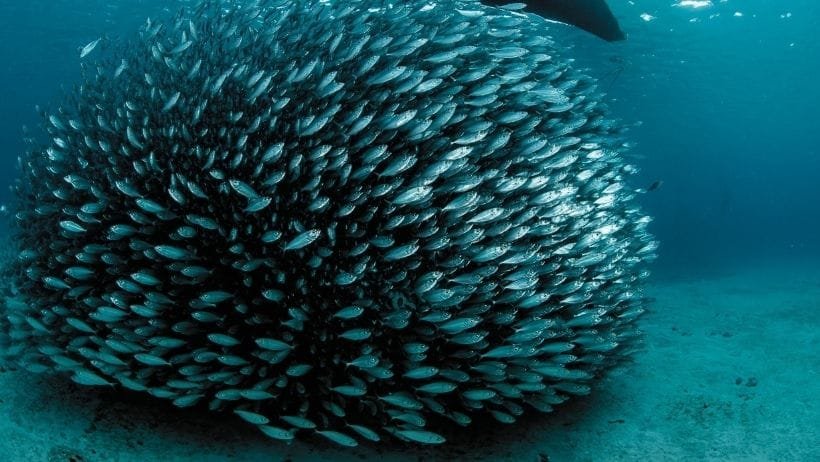
Jupiter, wherever it goes, expands. Neptune dissolves. As a Mutable and Water sign, when Jupiter is in Pisces, the image of a shoal that grows in size comes to mind. We do not know if the shoal grows because there are more and more fish coming in or if it is simply an illusion created by the fish themselves guided by an invisible force.
Neptune’s Entry into Pisces – February 2011
Neptune entered Pisces in February 2011. We have been feeling its influence for twelve years. In a way, we no longer feel it… It has become a daily reality. What happened back then? 4G. In mid-2011, Canada launched its first LTE wireless network in Ottawa, Ontario. The capacity of mobile data downloads increased like never before. Spotify launched globally in July 2011. In 2012, the states of Colorado and Washington were the first to legalize cannabis through the vote of their citizens. Also in 2012 Instagram began to grow in popularity and it was bought by Facebook in 2013. In December 2013 the Ebola epidemic began. We have also seen the rise of veganism, animal sanctuaries and animal rights organizations.
Neptune dissolves the borders between individuals and groups, connecting our society. It is also related to all forms of escapism, creativity, music, cinema and all sort of imaginary – and especially filters!, and yes, also pandemics. Compassion and care for the most vulnerable is also part of its realm.
The conjunction with Jupiter of April 12, 2022
So, during the weeks leading up to the conjunction on April 12, Neptune’s dissolving force will begin to expand in crescendo thanks to Jupiter. What can we expect? Several Telecom companies are planning the massive launch of 5G during the first quarter of 2022. Jupiter is related to inflation, and together with Neptune, it creates an inflationary process worldwide… although that is expected considering what has happened during 2020 and 2021. Let’s see possibilities:
5G
Inflation Worldwide
Expansion of beliefs or philosophies
Huge infatuation or vainglory
Global dissemination of truth
And global spread of lies
Accented fantasy
Great inspiration
Holographic Imaging
Great sacrifices
Great confusion
Expansion of spirituality
Global art events
This is an opportunity that, of course, can go into the higher or lower octaves of Pisces. From the highest vibrations we find a portal to connection with love and inspiration. Neptune’s energy can help us feel the union between everyone and everything. Our senses are capable of capturing the intangible. We are bathed in a wave of universal love. Feeling ONE with the trees, with the other animals and awakening a great compassion for everything that is discriminated against, devalued… we are able to see the sacred in all the work of the Creator. We can even see more clearly the illusions that have confused us for a long time. On the other hand, from the lowest vibrations, we find ourselves with a great desire to not see things as they are, to want to escape from reality, to feel better no matter what or simply live in a state of confusion.
Therefore, it is a good idea to stay centered, internalize this energy and connect with the heart. The conjunction of Jupiter with Neptune can be translated as an energetic wave that dissolves the borders of the collective unconscious. Something like what we feel during a massive concert of our favorite musician. We all become part of the shoal and are carried by an invisible force. Suddenly, we are all on the same page… And this is what the expansion created by Jupiter-Neptune causes. With this in mind, choosing what to tune into becomes important.
This planetary transit of Jupiter conjunct Neptune on April 12 forms a trine to the South Node in Scorpio at 22 degrees 54′. As a result, the door is opened for the dissolution of the interior compartments where we hide what we do not like about ourselves. Jupiter and Neptune bathe our wounds and shame, and thus help us open our hearts so that we let go of the pain of the past and thus “go lighter”.
In turn, Jupiter-Neptune makes a semi-sextile towards the Sun in Aries. The Aries impulsive energy will be “strongly” tempered by the Piscean influx, just as Mars in Aquarius makes an opposition to the Moon – which will be moving from Leo to Virgo. Jupiter-Neptune semi-sextile to the Sun in Aries influences Mars, the ruler of Aries. Although it is almost imperceptible (or perhaps not), it can prevent, or at least placate, the arousal of anger and the tendency to act without thinking or to create arguments and fights – typical of the Moon-Mars opposition.
Tuesday, April 12 is a good day to turn off the TV and not let ourselves be influenced by the outside world. That day is perfect to quiet down so that we can listen to our heartbeat, and thus allow the cosmic magic to do its work. Dancing, listening to music or birdsong, sitting under a tree, etc., can help tune us into the higher vibrations of Pisces. That is a day of connection and expansion. Everything we feel spreads through the ether. Let’s give our best. Nothing will go to waste.
Sabian Symbol
PHASE 354 (PISCES 24°):ON A SMALL ISLAND SURROUNDED BY THE VAST EXPANSE OF THE SEA, PEOPLE ARE SEEN LIVING IN CLOSE INTERACTION.
Dane Rudhyar
KEYNOTE:The need to consciously accept one’s own personal limitations in order to concentrate one’s energies and to live a centered and fulfilled life.
When I looked up the meaning of this Sabian symbol described by Dane Rudhyar I realized that during the conjunction of Jupiter and Neptune the need to center and stay with oneself is repeated. Rudhyar speaks of the importance of individuation in this symbol. Instead of becoming parts of the “shoal” that I spoke about before, it invites us to integrate our internal shoal – that is… the parts of the Self that need to harmonize with each other. When this harmonization occurs and we achieve “inner unity”, at the energetic level , we “separate” from the crowd. This is how individuation occurs. In this way, in addition to awakening individual consciousness, we also avoid being influenced by external forces that can inadvertently modify our perception.
The goal is not to let ourselves be carried away by the collective current but to feel that each one, as an individual, can include the collective within her/himself. As it is achieved, it is our very being that expands. And in each of our actions we include the Whole. This is the way of the mystic.
To finish, I think the song that somehow exemplifies this transit of Jupiter conjunct Neptune is “Imagine” by John Lennon. John Lennon released it on film in 1971, just when these two planets were in conjunction in the sign of Sagittarius.
The Sun, as we all know, is the star of our solar system. The planets rotate around them as the Sun travels through the Milky Way. On this cosmic journey, the Sun is the one leading the way. In the birth chart it is the same. It is the Sun that directs our self-expression.
When it is in conjunction with another planet, the natural direction of the Sun is united with the energy of the planet or planets that are next to it. When it comes to Uranus, self-expression is linked to the liberation of spaces for the new, breaking the old structures that limit our being.
Gustavo Cerati (Argentine musician)- Sun conjunct Uranus
The way these energies interact with each other depend on their positions. If Uranus is behind the Sun, as in the case of Gustavo Cerati (Uranus in Leo at 16 degrees, Sun in Leo at 17 degrees), this is what we call a separative aspect. The Sun has already passed over Uranus and is moving away. Here we find an electric self-expression, which has undergone the destructuring of its spirit … and can be experienced as internal chaos. Individuals with this position feel truly Uranian. They need space and freedom. Self-awareness comes through sudden flashes. These individuals surprise us, they are unpredictable and also somewhat eccentric.
When the Sun moves towards Uranus (what we call an applicative aspect), we find individuals who break with the establishment, who go in search of the new. Self-expression goes towards what is unconventional, they see the world from a point of view of social equality, they feel moved by their ideals and their vision of the future. These individuals can go through radical identity changes.
In both cases, we find individuals who do not follow routines, and it is very important that they respect this natural need since, otherwise, they can explode from time to time to get rid of everything that threatens their personal freedom. If they feel internal tension, it is possible that something is limiting them. They need to be able to express themselves freely and that nobody thinks of telling them how they should behave, especially in the area of life (or astrological house) where this conjunction is found.
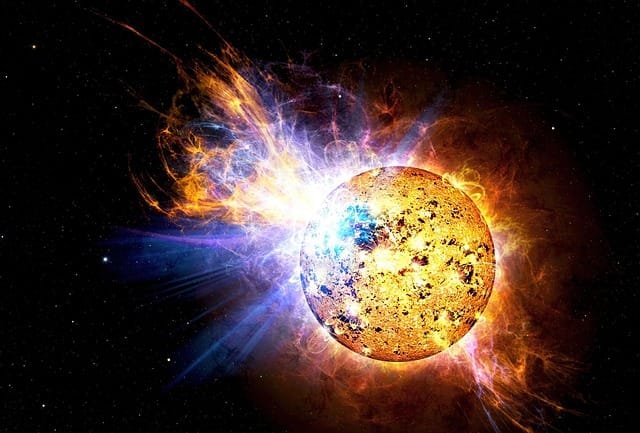
Solar Flare
The self-expression of these individuals manifests as a solar flare. Sparks of genius, inventiveness, creativity. They carry within them the energy of something new, which arises suddenly as if they had received an instantaneous download from the cosmos.
The aspects that this conjunction receives from other planets will modify their self-expression, making it more or less abrupt, more or less absolut. We are talking about beings that are truly individual and that will not allow under any circumstances to be typecast within social molds. They instinctively understand that each human being is unique and they themselves will become an example of it.
This conjunction indicates that there is a significant energetic current within the aura of these people. They need the space, the freedom of self-expression, create their own rules to experience the best vibration of this aspect. If they are in conservative, rigid, routine environments, then the need for liberation will appear as rebellion above all else and a great personal dissatisfaction that will lead them to create chaos in their environment, as a reflection of what they have inside.
At the collective level, these individuals will express in their identity what their entire generation seeks to innovate. Uranus is a transpersonal planet, and those who have it in conjunction with the Sun are, to a lesser or greater extent, examples of the desire for change and progress of their time.
Traditionally, in astrology, squares are considered conflictive and refer to two or more aspects of our nature (symbolized by the planets) that cannot understand each other.
In fact, we have to consider squares as the sculptors of our individuality. The planets that compose it form 45º angles to each other. They represent energies that are not very comfortable with each other – except when they are in signs of compatible elements.
When planets are at the beginning or end of a sign, they can form squares that are less conflictual. For example, planets forming squares between signs of Water and Earth element, or between Fire and Air signs. In this case, the friction between the two energies is less pronounced and although they show some dissatisfaction, it is still tolerable.
When the squares are between incompatible elements, as in the case of Fire and Water, or Earth and Air, the conflicts between the planets that form it are evident: a part of our being looks for something that is in contradiction with the energy of another internal aspect. In everyday life we experience this as conflicts that manifest as people or situations symbolized by the planets in question. They usually bring us headaches, broken hearts, arguments, etc. In general, squares arouse internal dissatisfaction, the feeling that things do not flow as we expect.
As I said above, squares are actually sculpting the nature of our being. The function of this astrological aspect is to deepen our personal needs until we achieve a new definition (form) of our individual composition. In this regard, squares are evolutionary in nature, forcing us to become alchemists of our own essential energy – as long as we get to work on it. Otherwise, we will continue to experience both external and internal conflicts.
To see how a square works, you can read Moon Square Venus as an example. In all cases, the squares help us to expand consciousness through contrasts. What is satisfying to one part of us is annoying to another part. The work of self-knowledge that is required in this situation is to find a common point that satisfies both parties. It’s not about settling for something that doesn’t convince for the sake of “harmony.” In fact, the squares are in charge of “destroying” this dynamic. It’s about really knowing what we really want for ourselves and acting accordingly. As we do so, we will deepen our self-knowledge.
As I have said, squares are creative aspects, they take us out of inertia and activate our desire for change. Although many times it is not easy to voluntarily open up to situations that create conflicts for us, once we welcome them and see them as catalysts of experiential richness, the squares become potentials for creativity and the expansion of Self.
We use cookies from third party services for marketing activities and to offer you a better experience and we follow GDPR policy. Read more by clicking "Privacy Preferences".